How to Leave the Jehovah's Witnesses: Fading, DA & Disfellowshipping
For most people raised as one of Jehovah's Witnesses, the hardest part of leaving is not losing a belief system — it is losing everyone. This guide explains the three practical routes out of the organization: fading quietly, formally disassociating by letter, and being disfellowshipped (since 2024, "removed from the congregation"). It lays out honestly what each path costs, what the Watchtower's own publications direct family and friends to do, what the 2024 terminology change did and did not change, and where to find community, support, and professional help. It is written without judgment for those still trapped inside (PIMO — "physically in, mentally out") and for those recently on the other side. It is not legal or medical advice; for those, see a qualified professional.
Overview: Three Doors, One Shared Consequence
There is no clean exit from Jehovah's Witnesses. Membership is not a subscription you cancel; it is a total social world — family, best friends, congregation, marriage, business contacts, and identity — bound together by the practice of shunning. The Watchtower teaches that anyone who leaves the "spiritual paradise," whether by drifting away, by resigning, or by being expelled, becomes someone the faithful should avoid.[1]
Because the destination is the same — some degree of social loss — the real question for anyone planning to leave is not whether it will hurt, but how much control you can keep over the timing and severity of that loss. The three routes differ enormously on exactly this point:
- Fading — quietly reducing activity without an announcement, preserving as much family and social contact as possible for as long as possible.
- Disassociation — formally resigning, usually by letter, which triggers the same shunning as expulsion but on your own terms.
- Disfellowshipping / "removal" — being expelled by a committee of elders after a judicial process, the most abrupt and total form of the cutoff.
The Doctrine That Makes Leaving So Costly
Before comparing the routes, it helps to see the rule the whole system runs on. The Watchtower's own publication "Keep Yourselves in God's Love" contains an appendix titled "How to Treat a Disfellowshipped Person," which builds the shunning practice on two scriptures. From 1 Corinthians 5:11 it quotes the direction to "stop keeping company with anyone called a brother who is sexually immoral... not even eating with such a man."[2] From 2 John 10-11 it draws the instruction: "Do not receive him into your homes or say a greeting to him. For the one who says a greeting to him is a sharer in his wicked works."[2]
The appendix then closes the smallest possible loophole, warning that "a simple 'Hello' to someone can be the first step that develops into a conversation and maybe even a friendship."[2] This is why a shunned person is not merely uninvited to gatherings but is often not greeted at all — the avoidance is engineered to prevent even the seed of a relationship.
The scale is not trivial. Watchtower's own reported figures indicate that roughly 1 in every 100 Jehovah's Witnesses is removed each year — on the order of 80,000 people annually — and that about two-thirds are never reinstated.[3] Every one of those numbers is a family split down the middle.
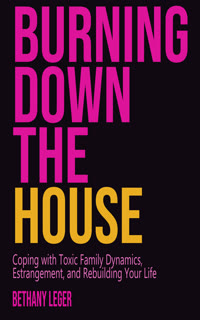
Coping with toxic family dynamics, estrangement, and rebuilding your life. For anyone dealing with the fallout of leaving a high-control group.
View on Amazon →Route 1 — Fading
Fading means gradually withdrawing from congregation life — fewer meetings, less field service, no commenting, eventually no attendance — without ever committing a formally "disfellowshipping offense" that a judicial committee could act on, and without announcing your loss of belief. The goal is to become inactive quietly enough that the elders lose interest before they build a case.
How it works in practice
- Slow the pace. People taper meeting attendance and service hours over months, not days. A sudden stop invites shepherding visits; a gradual decline is easier to attribute to work, health, stress, or "spiritual struggles."
- Give bland, non-committal reasons. "I've been dealing with some personal issues" ends a conversation. "I don't believe the 1914 doctrine" starts a judicial committee.
- Avoid the tripwires. Disfellowshipping offenses include not just "immorality" but also celebrating holidays, accepting a blood transfusion, joining another church, and — critically — "apostasy," meaning openly questioning or contradicting Watchtower teaching. A fader's whole strategy is to never trip a wire.
- Manage the elders. Elders are instructed to make shepherding calls on the inactive. Politely declining visits, staying calm, and never confirming doubts can keep you off the judicial radar. There is no rule requiring the elders to disfellowship someone merely for stopping attendance.
Pros
- Preserves family and social contact. This is the decisive advantage. Because a fader is not disfellowshipped or disassociated, no announcement is made, and there is no organizational command to shun. Parents, siblings, spouses, and friends can — in principle — keep speaking to you.
- Keeps options open. A fader who later wants to return faces no reinstatement process. A fader who wants to fully exit can do so later, on their timing.
- Protects the vulnerable. For someone whose spouse, children, or elderly parents are devout, fading can preserve a marriage and a household that a public exit would shatter.
Cons and risks
- It is slow and psychologically draining. Fading often means living a double life for months or years — the classic PIMO existence. The dissonance of pretending belief you no longer hold is itself a documented source of stress.
- It is not a guaranteed shield. The Watchtower repeatedly teaches that inactive ones and any who leave are "bad association" to be avoided. Even without a formal decree, many faders find friends and relatives cooling toward them anyway, because the culture treats any drift as spiritual danger.[4]
- The elders can still act. If someone reports that you celebrated a birthday, drank a toast at a "worldly" wedding, or expressed a doubt, a committee can be convened. Fading requires ongoing discretion, including on social media.
- It can feel dishonest. Some ex-members find the concealment corrosive to their integrity and ultimately choose disassociation precisely to stop pretending. Fading is a strategy, not a moral verdict — but it asks you to stay partly inside the very system you are leaving.
Route 2 — Disassociation
Disassociation is the formal, voluntary act of resigning from the organization — most commonly by writing a short letter stating that you no longer wish to be considered one of Jehovah's Witnesses. The Watchtower also treats certain acts (such as joining the armed forces or another religion) as automatic disassociation, but the deliberate route is the letter.
How it works
A disassociation letter can be a single sentence. It does not need to explain, argue, or accuse; many people keep it deliberately brief to deny the elders material. Once submitted, an announcement is made to the congregation — historically the words were that the person "is no longer one of Jehovah's Witnesses" — and from that moment the individual is treated exactly the same as someone who was disfellowshipped.[1]
Pros
- Autonomy and finality. You leave on your own terms, in your own words, at a time you choose. For many, this is a profound act of reclaiming agency after a lifetime of being defined by the organization.
- Honesty. It ends the double life. You are no longer pretending.
- It can pre-empt a judicial committee. Some people disassociate specifically to avoid the humiliation and invasiveness of a judicial hearing.
Cons and risks
- The shunning is immediate and total — identical to disfellowshipping. There is no softer treatment for having "chosen" to leave; if anything, the culture frames voluntary leavers as more culpable.
- In some jurisdictions there are legal wrinkles. How disassociation is recorded and announced has been litigated in several countries. This is exactly the kind of question to take to a lawyer, not to infer from a forum.
- It closes the "quiet" door. Once you have disassociated, you cannot un-ring the bell with family who take the command seriously.
Route 3 — Disfellowshipping (Now "Removal From the Congregation")
Disfellowshipping is expulsion imposed by the organization after a judicial committee — typically three elders — determines that a baptized member has committed a serious sin and is "unrepentant." Unlike fading or disassociation, this route is not chosen by the member; it is done to them.
Grounds range from conduct the wider world would consider private (sexual activity outside marriage, smoking, "drunkenness") to acts that are simply disagreements with the organization ("apostasy"). The process is confidential, the accused cannot bring a lawyer or supporter into the room, and there is a limited internal appeal.
Once the decision is made, an announcement is read to the congregation, and the shunning begins.
The 2024 Change: "Removed," Not "Disfellowshipped"
At the 2024 Annual Meeting, the Governing Body announced that the term "disfellowshipped" would be retired. The August 2024 Watchtower study article explained: "We will no longer refer to such ones as being disfellowshipped. In harmony with Paul's words recorded at 1 Corinthians 5:13, we will now refer to them as being removed from the congregation."[5]
Two genuine, if narrow, changes accompanied the relabeling:
- Greetings at meetings. The article states that "Christians can use their Bible-trained conscience in deciding whether to invite a person who was removed from the congregation — perhaps a relative or someone they were close to previously — to attend a congregation meeting."[5] The public-facing jw.org page adds that a removed person "is welcome to attend our religious services, where he may be greeted by Jehovah's Witnesses."[6]
- Elders' follow-up. Elders are now told to "make periodic efforts to contact him in the future" and, when removing someone, to "explain to him what steps he can take to return to the congregation."[5]
Family Contact: The Fine Print That Rarely Reaches the Public
The Watchtower maintains a two-track message: a gentle version for outsiders and journalists, and a stricter version for the rank and file. The appendix to "Keep Yourselves in God's Love" draws the line by household:
- Relatives in the same home: "normal day-to-day family activities and dealings may continue" — but the removed person is cut off from "spiritual" fellowship, such as family worship.[2]
- Relatives outside the home: contact should be "kept to a minimum," and "loyal Christian family members do not look for excuses to have dealings with a disfellowshipped relative not living at home."[2]
Reinstatement
A removed person may apply to return by attending meetings (sitting apart, unspoken to) and, after a period the elders judge sufficient — often many months — writing to request reinstatement. The August 2024 article says that "when a sinner manifests repentance and abandons his wrong course, he can be reinstated without delay."[5] In practice, reinstatement is at the elders' discretion, can be slow, and — as the Watchtower's own figures show — roughly two-thirds of those removed never come back.[3]
The Realities of Shunning
Whatever the route, most people who leave experience some version of the same loss: parents who won't speak to them, siblings who block their number, childhood friends who cross the street, a wedding or a funeral they cannot attend, grandchildren they may never meet. Researchers have described this as a form of "social death" and of "grieving the living" — mourning people who are still alive but have been instructed to treat you as gone.[9]
The mental-health toll
The consequences are well documented in peer-reviewed work. A study published in Pastoral Psychology concluded that shunning by Jehovah's Witnesses has "a long-term, detrimental effect on mental health, job possibilities, and life satisfaction."[10] Clinicians and researchers writing in outlets such as Psychology Today describe religious shunning as a form of institutionalized estrangement and emotional abuse, with effects including depression, anxiety, complex trauma, and — in documented cases — suicide.[11]
None of this is a reason not to leave. It is a reason to leave prepared — with a plan, a support network, and, where possible, professional help lined up before the isolation hits. You are not weak for hurting; you are grieving a loss deliberately inflicted, and that pain is a normal response to an abnormal situation.
Where to Find Community and Help
You are not the first person to walk out, and you do not have to do it alone. There is now a large, welcoming ex-JW world.
- r/exjw — the Reddit community of hundreds of thousands of former and questioning Witnesses. It is the single most accessible first stop: anonymous, active around the clock, and full of people who understand the exact terminology and pain you carry. Threads on fading, disassociation letters, and "just got DF'd" appear daily.
- Support groups and meetups. Ex-JW support groups (online and in-person) exist in many cities and countries; conventions and video meetups have grown into a genuine subculture. Established ex-JW YouTube channels and podcasts offer both information and the simple relief of hearing your own experience described by someone who lived it.
- Therapists experienced with religious trauma. This is the most valuable investment many ex-members make. Look specifically for clinicians familiar with high-control groups, religious trauma, or "Religious Trauma Syndrome" — general therapists sometimes underestimate how total the loss is. Reputable directories now let you filter for therapists who work with faith transitions and cult recovery.
- Advocacy and documentation resources. Sites like JWfacts and AvoidJW collect the primary sources and organizational documents that help many people confirm they are not "crazy" for questioning — a step that is itself part of healing.
A Note on Choosing
There is no "brave" route and no "cowardly" route. Fading is not dishonest; it is survival for people with everything to lose. Disassociation is not reckless; it is integrity for people ready to stop pretending. Being disfellowshipped is not a personal failure; for many it is simply what happens when you stop hiding who you are. The right path is the one that keeps you safest — emotionally, financially, and physically — given the specific people in your life.
Whatever you choose, know this: the isolation the organization engineers is designed to feel permanent and total, and it is neither. On the other side of that engineered silence is a community of people who found their way out and built lives — friendships, families, meaning — that the Watchtower said were impossible without it. They were wrong about that, too.
This article is informational and does not constitute legal or mental-health advice. For decisions with legal consequences (custody, marriage, employment, defamation), consult a qualified attorney. For your mental health and safety, consult a licensed professional. If you are in crisis or considering harming yourself, contact your local emergency services or a suicide-prevention hotline immediately.
See Also
- The ExJW Movement — Key Figures & Resources
- Are Jehovah's Witnesses a Cult? The BITE Model Applied
- Books About Jehovah's Witnesses
- Dating, Marriage & Divorce Rules for Jehovah's Witnesses
- Disfellowshipping & Shunning — Complete History
- Do Jehovah's Witnesses Believe in Jesus? Are They Christian?
References
1. ↩ "Keep Yourselves in God's Love" (Watch Tower Bible and Tract Society, 2008), Appendix, "How to Treat a Disfellowshipped Person," pp. 207–209 — disassociated persons are treated the same as those expelled. [jw.org]
2. ↩ "Keep Yourselves in God's Love," Appendix, "How to Treat a Disfellowshipped Person," pp. 207–209, quoting 1 Corinthians 5:11 and 2 John 10-11, including the "normal day-to-day family activities may continue" household provision, the counsel that contact with a removed relative outside the home be "kept to a minimum," and the warning that "a simple 'Hello'... can be the first step." [wol.jw.org]
3. ↩ Paul Grundy, "Jehovah's Witnesses, Removing, Disfellowshipping and Shunning," JWfacts.com — analysis of Watchtower-reported figures indicating roughly 1 in 100 members removed annually (~80,000), of whom about two-thirds are never reinstated. [jwfacts.com]
4. ↩ JWfacts.com, "Disfellowshipping and Shunning" — documentation that inactive ones and faders are commonly treated as "bad association" despite the absence of a formal decree. [jwfacts.com]
5. ↩ "Help for Those Who Are Removed From the Congregation," The Watchtower (Study Edition), August 2024 — terminology change per 1 Corinthians 5:13; elders to explain steps to return and "make periodic efforts to contact him"; conscience-based meeting invitations (par. 14); "reinstated without delay" upon repentance (par. 11). [jw.org]
6. ↩ "How Do Jehovah's Witnesses Treat Those Who Used to Belong to Their Religion? Are They Disfellowshipped?" jw.org FAQ — "We do not socialize with someone who has been removed," "welcome to attend our religious services, where he may be greeted," blood-ties statement, and the apostasy exception on greetings. [jw.org]
7. ↩ "The 2024 Annual Meeting — Highlights," AvoidJW.org, and analysis of the March 2024 Governing Body Update characterizing the "removal" relabeling as largely cosmetic. [avoidjw.org]
8. ↩ The Watchtower, January 1, 2013, p. 16 — "Do not look for excuses to associate with a disfellowshipped family member, for example, through e-mail." [wol.jw.org]
9. ↩ "Grieving the Living: The Social Death of Former Jehovah's Witnesses," Journal of Religion and Health (2021). [springer.com]
10. ↩ Investigation of the impact of shunning among former Jehovah's Witnesses, published in Pastoral Psychology — concluding shunning has "a long-term, detrimental effect on mental health, job possibilities, and life satisfaction." [researchgate.net]
11. ↩ "How Religious Shunning Ruins Lives," Psychology Today (March 2024) — on shunning as institutionalized estrangement with documented psychological harm. [psychologytoday.com]