The Blood Transfusion Doctrine — Complete History
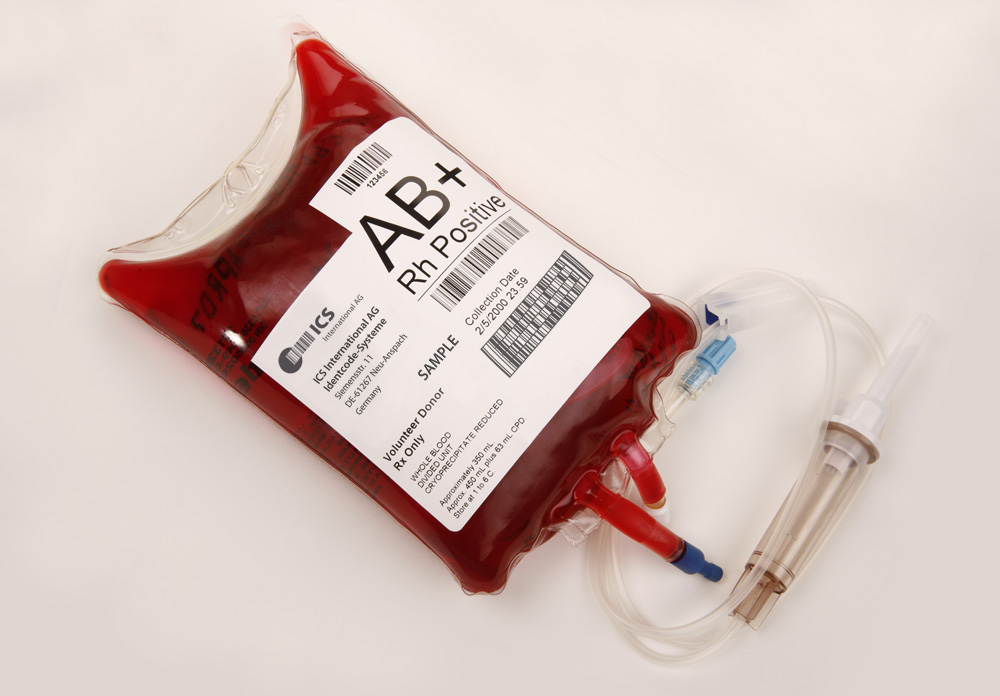 Via Wikimedia Commons.
What began in 1945 as a theological opinion — that blood transfusions violate the biblical command to "abstain from blood" — has evolved into a shifting, internally contradictory policy that simultaneously bans the four "primary components" of blood while permitting all of their sub-fractions, meaning that 100% of blood can now be transfused in fractionated form. Along the way, the organization praised blood donation (1925), banned vaccinations as violating God's "everlasting covenant" (1921–1952), prohibited organ transplants as "cannibalism" (1967–1980), and featured dead children on the cover of Awake! as martyrs (1994). At every reversal, no apology was issued, no accountability taken, and no acknowledgment made that people had died obeying a rule the organization later abandoned.
Before the Ban: Blood Transfusions Commended (1892–1944)
Charles Taze Russell held that the Acts 15 prohibition on blood was a temporary first-century measure to keep peace between Jewish and Gentile Christians, not a binding law for all time.[1] Under Russell's theology, blood carried no special prohibitive significance for modern Christians.
During the Rutherford era, Watchtower publications actively commended the medical use of blood:
- 1925: The Golden Age praised a man who had donated blood for transfusion 45 times without payment.[2]
- 1940: Consolation (formerly The Golden Age) reported approvingly on a woman who survived after a physician donated a quart of his own blood during emergency surgery.[3]
The Vaccination Detour (1921–1952)
Before turning to blood transfusions, the Watchtower first banned vaccinations — a history that is essential context for understanding how the organization approaches medical doctrine.
Beginning in 1921, The Golden Age published a series of articles opposing vaccination. By 1931, the position had hardened: vaccinations were declared a violation of "the everlasting covenant God made with Noah."[4] The magazine claimed: "Vaccination has never saved a human life. It does not prevent smallpox."[5]
This was published during a period when the United States alone had 100,000 cases of smallpox annually, with mortality rates as high as 40%.[6] How many Witnesses suffered serious illness or death from following this directive is unknown.
In 1952 — after Clayton Woodworth's death in late 1951 — the ban was quietly reversed: "The matter of vaccination is one for the individual that has to face it to decide for himself... all objection to vaccination on Scriptural grounds seems to be lacking."[7]
No apology was issued. No acknowledgment was made that people had been harmed. In 1993, the organization would falsely claim that its position on vaccination had been "consistent" throughout.[8]
Coping with toxic family dynamics, estrangement, and rebuilding your life. For anyone dealing with the fallout of leaving a high-control group.
View on Amazon →The Blood Ban Begins (1945)
The July 1, 1945 issue of The Watchtower drew the link that would become the foundation of the blood doctrine: it equated blood transfusion with the eating of blood forbidden in Genesis 9:4 and Acts 15:28–29.[9]
The reasoning rested on a misunderstanding of biology. Watchtower writers believed that transfused blood nourished the body in the same way that eaten food did. By 1950, the organization was referring to both eating and transfusing blood as simply "the transfer" of blood, treating them as medically identical.[10]
A 1951 Watchtower made the equation explicit: "A patient in the hospital may be fed through the mouth, through the nose, or through the veins. When sugar solutions are given intravenously, it is feeding the patient through the veins, and when a blood transfusion is given, the patient is being fed through the veins."[11]
This is medically false. A blood transfusion is a tissue transplant — the blood remains functionally intact in the recipient's circulatory system. It is not digested, absorbed, or metabolized as food. This premise became the doctrinal bedrock of the blood ban for decades.
Escalation: 1945–1961
Initially, accepting a blood transfusion was discouraged but not a disfellowshipping offense. Through the 1950s, the organization built the case against blood with increasingly extreme rhetoric. A 1951 Watchtower sneered at "transfusion enthusiasts with a savior-complex."[12] A 1961 article cited a Brazilian surgeon claiming transfusions caused "moral insanity, sexual perversions, repression, inferiority complexes, petty crimes" — pseudoscience invoked to buttress a theological position.[13]
1961: Blood Becomes a Disfellowshipping Offense
The January 15, 1961 Watchtower made the doctrine enforceable: accepting a blood transfusion was now grounds for disfellowshipping — the total shunning of the individual by all family and friends within the organization.[14]
The organization later confirmed: "Beginning in 1961 any who ignored the divine requirement, accepted blood transfusions, and manifested an unrepentant attitude were disfellowshipped from the congregations of Jehovah's Witnesses."[15]
This transformed the blood doctrine from a teaching to be respected into a rule to be obeyed under threat of disfellowshipping — which, for many Witnesses, meant losing one's entire social world.
The Organ Transplant Ban (1967–1980)
In 1967, the Watchtower extended the blood/eating logic to organ transplants. A November 15, 1967 Watchtower article declared: "Those who submit to such operations are thus living off the flesh of another human. That is cannibalistic."[16]
For thirteen years (1967–1980), Jehovah's Witnesses were expected to refuse organ transplants — including life-saving kidney, cornea, and bone marrow transplants — on the grounds that receiving an organ constituted cannibalism. Members who accepted transplants faced being disfellowshipped.[17]
In 1980, the ban was reversed just as abruptly: "Regarding the transplantation of human tissue or bone from one human to another, this is a matter for conscientious decision by each one of Jehovah's Witnesses."[18]
No apology was offered. No acknowledgment was made that members had died during the thirteen-year ban. The Watchtower Publications Index was even edited to remove references to the 1967 article on transplants.[19]
The Shifting Line on Blood Fractions
The most intellectually incoherent aspect of the blood doctrine is the ever-shifting line between what is banned and what is permitted. The evolution is summarized in the following table:
| Year | Policy | Source |
|---|---|---|
| 1945 | All blood transfusions prohibited | Watchtower, July 1, 1945 |
| 1954 | Blood serums (e.g., gamma globulin) prohibited | Awake!, Jan. 8, 1954 |
| 1958 | Blood serums still prohibited; storing own blood prohibited | Watchtower, Sep. 15, 1958 |
| 1961 | All blood components including fractions and hemoglobin prohibited; accepting blood becomes a disfellowshipping offense | Watchtower, Jan. 15 & Nov. 1, 1961 |
| 1964 | Transfusions for pets prohibited; blood-based fertilizer questioned; dog food manufacturers to be contacted | Watchtower, Feb. 15, 1964 |
| 1974 | Blood serums (e.g., gamma globulin) now a "conscience matter" — reversal of 1954 position | Watchtower, Jun. 1, 1974 |
| 1975 | Hemophiliac preparations (Factor VIII/IX) prohibited | Awake!, Feb. 22, 1975 |
| 1978 | Hemophiliac preparations now permitted — reversal of 1975 position | Watchtower, Jun. 15, 1978 |
| 1982 | "Major vs. minor" component framework introduced; some minor components allowed | Awake!, Jun. 22, 1982 |
| 1990 | Placental blood transfer used to justify some fractions | Watchtower, Jun. 1, 1990 |
| 2000 | All fractions of primary components declared a "conscience matter" | Watchtower, Jun. 15, 2000 |
| 2000 | Accepting a transfusion reclassified: person is deemed to have "disassociated" rather than being disfellowshipped — same result, different label | Watchtower press release, June 2000 |
| 2004 | Detailed chart published: four "primary components" banned, but all sub-fractions of all four components are conscience matters | Watchtower, Jun. 15, 2004 |
| Mar. 2026 | Autologous blood storage (storing one's own blood for later use) declared a "conscience matter" — reversal of 1958–2026 prohibition | JW Broadcasting, GB Update #2, 2026 (Gerrit Lösch) |
The Absurdity of the Current Position
The 2004 Watchtower chart crystallized the current position. Blood is divided into four "primary components": red cells, white cells, platelets, and plasma. These four components are banned. But every sub-fraction derived from each of these four components is a conscience matter — meaning a Witness may accept them without organizational sanction.[21]
The problem: when you recombine the permitted sub-fractions, you get 100% of the blood.[22]
A red blood cell, for instance, is approximately 97% hemoglobin and 3% membrane. Hemoglobin is permitted. The membrane proteins are fractions and thus also permitted. But the red blood cell itself is banned. The Associated Jehovah's Witnesses for Reform on Blood (AJWRB) has compared this to telling someone: "You can take all the food out of these grocery bags, but you will be punished if you take the groceries with the bags."[23]
Consider albumin, one of the permitted fractions. It makes up about 2.2% of blood by volume — more than white blood cells (about 1%), which are banned. A typical burn treatment requires approximately 600 grams of albumin, derived from about 45 liters of whole blood. This is hardly a "small fraction."[24]
Similarly, cryosupernatant — a permitted fraction — constitutes approximately 99% of blood plasma. Factor VIII, used to treat hemophilia, requires pooling blood from as many as 2,500 donors per batch. A severe hemophiliac may be exposed to blood products derived from 800,000 to 1 million different donors annually — all permitted under current Watchtower policy.[25]
Until March 2026, the doctrine also created a paradox around blood storage. Witnesses could not store their own blood before surgery — blood cards explicitly stated: "I also refuse to pre-donate my own blood for later infusion." But every permitted fraction — albumin, immunoglobulins, clotting factors — was manufactured from stored, donated blood. The Watchtower forbade the source activity (donating and storing blood) while permitting consumption of its products.[26]
The March 2026 Blood Storage Reversal
On March 20, 2026, Governing Body member Gerrit Lösch announced in Governing Body Update #2 for 2026 that autologous blood storage — storing one's own blood for later use in medical procedures — was now a conscience matter. Lösch stated: "The Bible does not comment on the use of a person's own blood in medical and surgical care." He specified that the clarification meant each Christian "must decide for himself how his own blood will be used in all medical and surgical care. This includes whether to allow his own blood to be removed, stored and then given back to him."[45]
To support the change, Lösch cited Leviticus 17:13 — the command that blood of a hunted animal must be "poured out and covered with dust" — and then stated that this Mosaic Law is not binding on Christians, citing Colossians 2:13–14. He also quoted the October 15, 2000 Watchtower, which stated: "A Christian must decide for himself how his own blood will be handled in the course of a surgical procedure, medical test or current therapy."[45]
However, that same October 2000 Watchtower article, just paragraphs above the line Lösch quoted, explicitly stated that storing blood conflicts with God's law. The blood card distributed by the organization — printed by Watchtower, signed by Witnesses at Kingdom Halls — stated under Section 2: "I also refuse to pre-donate my own blood for later infusion." This language remained on cards in Witnesses' wallets at the time of the announcement.[26]
The announcement was presented as a "clarification" rather than a reversal — despite directly contradicting the organization's own printed blood card and decades of published teaching that blood storage violated God's law.
Practical Limitations
The change permits autologous blood storage only for planned procedures — scheduled surgeries such as heart operations or elective C-sections where blood can be drawn and stored in advance. It does nothing for emergencies — car accidents, traumatic injuries, sudden hemorrhages, or childbirth complications — which account for the majority of situations where blood transfusions save lives. The ban on accepting donated blood from other people remains in effect.[45]
The Leak and Suppression Attempt
According to accounts in the ExJW Reddit community, the announcement was reportedly leaked by a user posting as Larchington several days before its official release on JW Broadcasting. According to accounts in the ExJW Reddit community, Watchtower reportedly filed a copyright claim within 24 hours, Reddit removed the post, and the user known as Larchington reportedly received a warning on his account. The speed of the reported takedown — before the announcement had even been made public — was cited within that community as indicating the organization's awareness of the announcement's significance.[46]
According to those same community observers, at the time the announcement went live, the organization's own website had not yet been updated to reflect the change. The Enjoy Life Forever study book — used to study with prospective converts before baptism — was reported to still state that storing one's own blood was not acceptable. Community observers reported that the website FAQ on blood transfusions was briefly accessible and then removed, and that the old blood card language remained on JW.org.[46]
The Bulgaria Deception (1998)
In the 1990s, the Bulgarian government refused to re-register Jehovah's Witnesses as a recognized religion, partly because of concerns about the blood transfusion ban. The case reached the European Commission of Human Rights.
On March 9, 1998, the Commission brokered an agreement. The Watchtower signed a document committing that "members should have free choice in the matter for themselves and their children, without any controls or sanctions on the part of the association."[27]
The agreement specifically stated that the organization would not furnish advance medical directives refusing blood transfusions for minors, and that adult members retained "the freedom of choice" regarding medical treatment.[28]
The Watchtower's April 27, 1998 press release told a different story: "The terms of the agreement do not reflect a change in the doctrine of Jehovah's Witnesses."[29]
In practice, the organization continued to enforce the blood ban worldwide — including in Bulgaria. The "no sanctions" commitment was rendered meaningless by a procedural sleight of hand: a Witness who accepted blood was deemed to have "disassociated" themselves (a 2000 policy change), rather than being "disfellowshipped." The practical consequence — total shunning by family and congregation — was identical.[30]
A 2020 ruling by the Hamburg Regional Court stated bluntly: "The acceptance of a blood transfusion leads to exclusion from the community if the person concerned does not repent it."[31]
Hospital Liaison Committees
Beginning in the 1980s, the Watchtower established Hospital Liaison Committees (HLCs) — groups of elders assigned to work with hospitals whenever a Witness patient faces a blood-related medical decision.[32]
The HLCs serve multiple functions: they maintain lists of sympathetic physicians willing to perform bloodless surgery, they provide the organization's approved literature to medical staff, and they intervene when doctors or social services attempt to order transfusions for Witness patients — particularly children.[33]
The Awake! Children's Cover (May 22, 1994)
The May 22, 1994 issue of Awake! featured the photographs of children on its cover under the headline "Youths Who Put God First." The article celebrated children who had died after refusing blood transfusions, comparing them to young martyrs of earlier centuries: "In former times thousands of youths died for putting God first. They are still doing it, only today the drama is played out in hospitals and courtrooms, with blood transfusions the issue."[34]
The cover has become one of the most widely cited examples of the human cost of the blood doctrine. The children pictured had died after refusing transfusions — deaths that the organization presented as acts of courageous faith to be emulated.[35]
In January 1995, Awake! published the story of 15-year-old Joshua Walker, who died after being allowed by a court to refuse a blood transfusion as a "mature minor." The Watchtower celebrated the court decision as "a victory for children's rights."[36]
In a 2016 convention broadcast, Governing Body member Anthony Morris III praised a boy who had died refusing blood, describing the doctor's attempts to save the child's life as "persecution."[37]
The Death Toll
The exact number of Jehovah's Witnesses who have died as a result of refusing blood transfusions is unknown. The organization does not track or publish such data. Academic estimates have varied widely, but multiple medical ethicists and researchers have concluded that the number runs into the thousands over the doctrine's nearly eighty-year history.[38]
The deaths include both adults making their own decisions and children whose parents refused transfusions on their behalf — or who, like Joshua Walker and Dennis Lindberg (age 14, died 2007 after refusing blood for leukemia), were deemed "mature minors" capable of choosing death over a blood transfusion they had been indoctrinated from birth to refuse.[39]
The Watchtower itself has acknowledged the basic reality: "Jehovah's Witnesses do not argue that blood transfusions have not kept alive patients who otherwise might have died."[40]
The Complete Medical Flip-Flop Record
The blood doctrine does not exist in isolation. It is part of a broader pattern of Watchtower medical directives that have reversed completely — always without apology and always after lives were lost following the previous position:
| Medical Practice | Banned | Permitted | Human Cost |
|---|---|---|---|
| Vaccinations | 1921–1952 | 1952–present | Unknown deaths and illnesses during 31-year ban |
| Organ transplants | 1967–1980 (declared "cannibalism") | 1980–present (conscience matter) | Unknown deaths during 13-year ban; no apology |
| Blood serums | 1954–1974 | 1974–present (conscience matter) | Unknown; 20-year prohibition on vaccines using blood |
| Hemophiliac preparations | 1975 | 1978–present | Hemophiliacs denied Factor VIII/IX for 3 years |
| Albumin | Pre-1981 ("under the Scriptural ban") | 1981–present | Burn victims and others denied treatment |
| Bone marrow transplants | Discouraged (1967–1984) | 1984–present (conscience matter) | Unknown |
| Whole blood / 4 primary components | 1945–present (still banned) | Not permitted | Ongoing deaths |
In every case where the ban was reversed, the organization later claimed its position had been "consistent" or a matter of "individual conscience" all along — a claim that appears to be contradicted by its own published literature.
Why the Doctrine Persists
The "disassociation" mechanism. Since 2000, the Watchtower has classified a Witness who accepts blood as having voluntarily left the organization, rather than being expelled. The practical effect — complete shunning — remains unchanged.[42]
Timeline
| Date | Event |
|---|---|
| 1892 | Russell addresses blood issue; views Acts 15 prohibition as temporary first-century measure[1] |
| 1921 | Golden Age begins publishing articles opposing vaccination[4] |
| 1925 | Golden Age commends a man for donating blood 45 times[2] |
| 1931 | Vaccinations declared a violation of God's "everlasting covenant" with Noah[5] |
| 1940 | Consolation praises emergency blood transfusion that saved a woman's life[3] |
| Jul. 1945 | Watchtower first equates blood transfusion with eating blood; transfusions declared wrong[9] |
| 1952 | Vaccination ban quietly reversed after Woodworth's death[7] |
| Jan. 1961 | Blood transfusions become a disfellowshipping offense[14] |
| Nov. 1961 | All blood components including fractions and hemoglobin explicitly prohibited[43] |
| 1964 | Transfusions for pets banned; blood-containing fertilizer and dog food questioned[44] |
| Nov. 1967 | Organ transplants declared "cannibalism"[16] |
| 1974 | Blood serums (gamma globulin) reclassified as a conscience matter[20] |
| Feb. 1975 | Hemophiliac preparations (Factor VIII/IX) prohibited[20] |
| Jun. 1978 | Hemophiliac preparations permitted — reversal of 1975 position[20] |
| Mar. 1980 | Organ transplant ban reversed: "no longer necessarily cannibalistic"[18] |
| 1982 | "Major vs. minor" blood component framework introduced[20] |
| May 22, 1994 | Awake! features dead children as martyrs under "Youths Who Put God First" headline[34] |
| Mar. 9, 1998 | Bulgaria agreement: Watchtower pledges "no controls or sanctions" for blood choices[27] |
| Jun. 2000 | All fractions of primary blood components declared a "conscience matter"[21] |
| 2000 | Accepting blood reclassified as "disassociation" rather than disfellowshipping[42] |
| Jun. 2004 | Detailed chart published showing four banned "primary components" with all sub-fractions permitted[21] |
| Nov. 2007 | 14-year-old Dennis Lindberg dies in Washington State after refusing blood for leukemia[39] |
| Mar. 20, 2026 | Governing Body announces autologous blood storage is now a "conscience matter"; Gerrit Lösch presents in GB Update #2, citing Mosaic Law not binding on Christians[45] |
See Also
- Medical Advice — Dangerous Watchtower Mistakes — The broader history of harmful Watchtower medical directives
- Nathan Homer Knorr (1905–1977) — President during the blood doctrine's enforcement escalation
- Frederick William Franz (1893–1992) — Chief theologian during the doctrine's development
- Disfellowshipping & Shunning — The enforcement mechanism behind the blood ban
- Legal Battles & Court Cases — Court cases involving blood transfusion refusal for minors
- Major Doctrinal Changes — The broader pattern of Watchtower reversals
References
1. ↩ The Watchtower, January 15, 1892; Russell viewed Acts 15 as a temporary measure for first-century unity. [ajwrb.org]
2. ↩ The Golden Age, July 29, 1925, p. 683. [en.wikipedia.org]
3. ↩ Consolation, December 25, 1940, p. 19. [jwfacts.com]
4. ↩ The Golden Age, January 3, 1923, p. 211 ("The Vaccination Fraud"); escalating through the 1920s. [ajwrb.org]
5. ↩ The Golden Age, February 4, 1931, pp. 293–294. [smmcroberts.net]
6. ↩ "Blood Transfusion in Modern History," AJWRB.org: U.S. had 100,000 annual smallpox cases with up to 40% mortality during the vaccination ban period. [ajwrb.org]
7. ↩ The Watchtower, December 15, 1952, p. 764. [jwfacts.com]
8. ↩ Awake!, 1993: "Previous articles in this journal and its companion, The Watchtower, have presented a consistent position." Cited on JWfacts.com. [jwfacts.com]
9. ↩ The Watchtower, July 1, 1945, pp. 198–201. [ajwrb.org]
10. ↩ "Evolution of the Watchtower Blood Policy," AJWRB.org: by 1950 the Society was referring to both eating and transfusing as "the transfer" of blood. [ajwrb.org]
11. ↩ The Watchtower, July 1, 1951, p. 415. [ajwrb.org]
12. ↩ The Watchtower, 1951. [en.wikipedia.org]
13. ↩ The Watchtower, 1961, quoting Dr. Américo Valério and Dr. Alonzo Jay Shadman. [en.wikipedia.org]
14. ↩ The Watchtower, January 15, 1961, pp. 63–64. [jwfacts.com]
15. ↩ Jehovah's Witnesses—Proclaimers of God's Kingdom (1993), pp. 183–184. [jwfacts.com]
16. ↩ The Watchtower, November 15, 1967, pp. 702–704. [ajwrb.org]
17. ↩ "Organ Transplants," AJWRB.org: for 13 years (1967–1980), Witnesses were expected to refuse organ transplants or face disfellowshipping. [ajwrb.org]
18. ↩ The Watchtower, March 15, 1980, p. 31. [ajwrb.org]
19. ↩ "Medical Advice — Dangerous Watchtower Mistakes," JWfacts.com: the Watchtower Publications Index was edited to remove references to the 1967 transplant article. [jwfacts.com]
20. ↩ Timeline compiled from AJWRB.org, "Blood Transfusion in Modern History." [ajwrb.org]
21. ↩ The Watchtower, June 15, 2000; The Watchtower, June 15, 2004, pp. 19–23. [jwfacts.com]
22. ↩ "Watchtower Approved Blood Transfusions," AJWRB.org: "How can they permit the use of 100% of blood in fractionated form and claim they are not using blood?" [ajwrb.org]
23. ↩ "Blood Fractions," Jehovahs-Witness.com forum: analogy of grocery bags and their contents. [jehovahs-witness.com]
24. ↩ "Watchtower Approved Blood Transfusions," AJWRB.org: albumin treatment for burns requires ~45 liters of whole blood. [ajwrb.org]
25. ↩ "Watchtower Approved Blood Transfusions," AJWRB.org: Factor VIII requires pooling from 2,500 donors per batch; severe hemophiliacs exposed to products from up to 1 million donors annually. [ajwrb.org]
26. ↩ JWfacts.com: Witnesses may not store their own blood, yet permitted fractions are manufactured entirely from stored, donated blood. [jwfacts.com]
27. ↩ European Commission of Human Rights, Application No. 28626/95, settlement agreement, March 9, 1998. [jwfacts.com]
28. ↩ Settlement terms: Section 2.2.1 prohibited advance directives refusing blood for minors; Section 2.2.2 recognized adult freedom of choice. [jz.help]
29. ↩ Watchtower press release, April 27, 1998. [watchman.org]
30. ↩ "Bulgaria, the Watchtower Society, blood transfusions and military service," JWfacts.com. [jwfacts.com]
31. ↩ Hamburg Regional Court ruling, November 27, 2020; cited by JZ Help e.V. [jz.help]
32. ↩ "Blood Transfusion in Modern History," AJWRB.org: by 1980 the Society was establishing hundreds of HLCs. [ajwrb.org]
33. ↩ AJWRB.org: HLCs maintain lists of sympathetic doctors and endeavor to circumvent doctors or social service agencies who intervene on behalf of minors. [ajwrb.org]
34. ↩ Awake!, May 22, 1994, p. 2, "Youths Who Put God First." [jwfacts.com]
35. ↩ "Jehovah's Witnesses and Blood Transfusions: Their Use of Scripture in Their Blood Doctrine," Christian Research Institute: the 1994 issue featured children who died refusing blood, hailed as martyrs. [equip.org]
36. ↩ Awake!, January 22, 1995, pp. 11–15: 15-year-old Joshua Walker's death celebrated as "a victory for children's rights." [jwfacts.com]
37. ↩ 2016 "Remain Loyal to Jehovah" regional convention broadcast: Anthony Morris III praised a boy who died refusing blood. [jwfacts.com]
38. ↩ Kerry Louderback-Wood, "Jehovah's Witnesses: Blood and the Tort of Misrepresentation," Journal of Church and State (2005); Osamu Muramoto, various publications in Journal of Medical Ethics.
39. ↩ "When a 14-Year-Old Chooses to Die Because of Religion," KUOW (October 25, 2018): Dennis Lindberg died November 28, 2007. [kuow.org]
40. ↩ Blood, Medicine and the Law of God (1961), p. 38. [jwfacts.com]
41. ↩ Table compiled from AJWRB.org and JWfacts.com timelines. [ajwrb.org]
42. ↩ "New Watchtower Blood Transfusion Policy," Watchman Fellowship: the 2000 policy reclassified blood acceptance as "disassociation" rather than disfellowshipping. [watchman.org]
43. ↩ The Watchtower, November 1, 1961, p. 669. [jwfacts.com]
44. ↩ The Watchtower, February 15, 1964, pp. 127–128. [en.wikipedia.org]
45. ↩ JW Broadcasting, Governing Body Update #2, 2026 (Gerrit Lösch), March 20, 2026: "The Bible does not comment on the use of a person's own blood in medical and surgical care... Each Christian must decide for himself how his own blood will be used in all medical and surgical care. This includes whether to allow his own blood to be removed, stored and then given back to him." [jw.org]
46. ↩ ExJW Reddit community response: leak by user Larchington removed via Watchtower copyright claim within 24 hours of posting; JW.org materials not yet updated at time of announcement; Enjoy Life Forever study book still listed blood storage as unacceptable; blood card Section 2 language ("I also refuse to pre-donate my own blood for later infusion") still in wallets.