Finances, Real Estate & The Billion-Dollar Flip
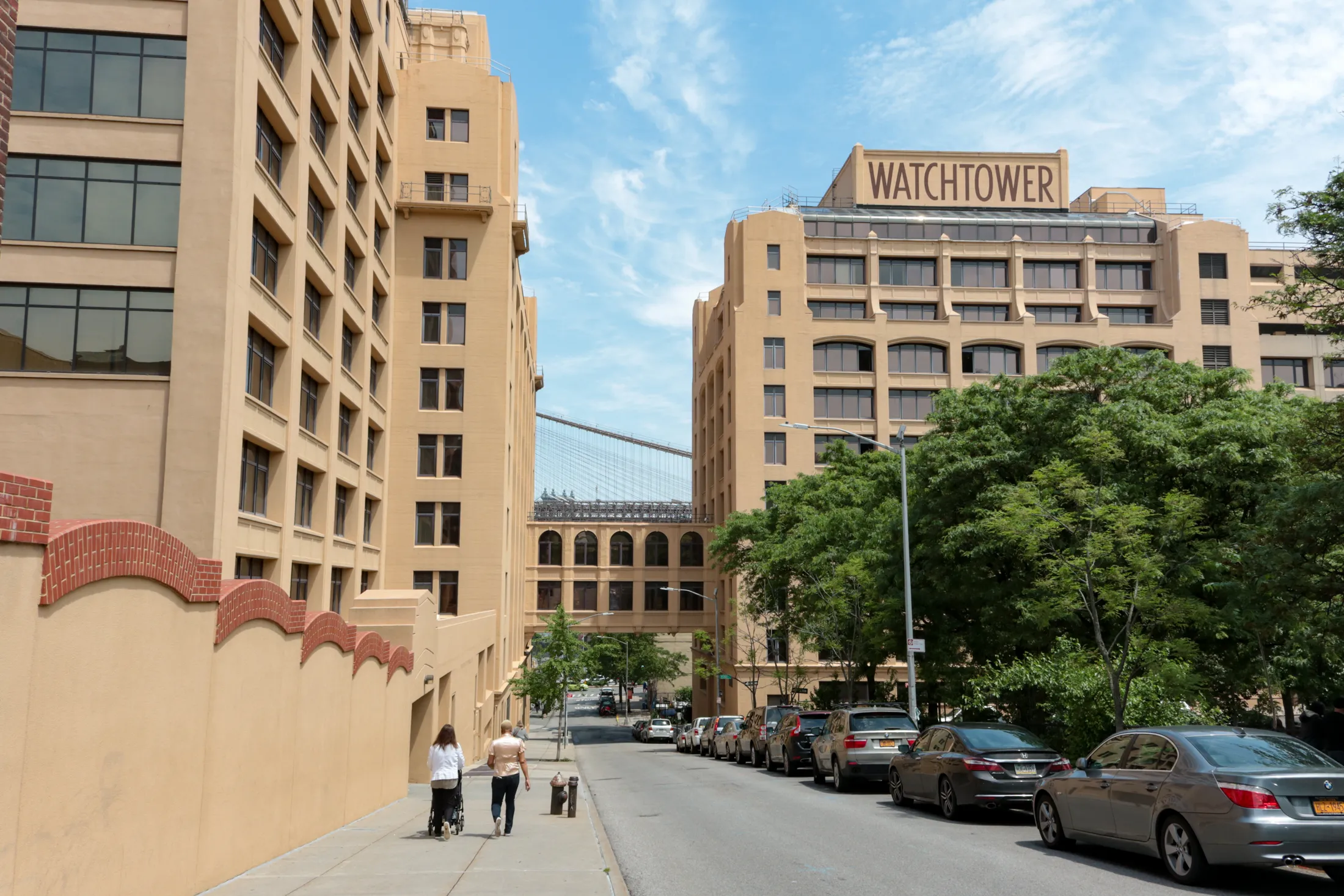 Watchtower building, Columbia Heights, Brooklyn. Via Wikimedia Commons. CC-BY 2.0.
The Watchtower Bible and Tract Society is, by any financial measure, a billion-dollar enterprise — yet it operates with no public financial transparency, no independent auditing, and no accountability to the millions of members whose donations and unpaid labor built it. The organization acquired over three dozen properties in Brooklyn Heights and DUMBO over nearly a century — tax-free, maintained by volunteer workers paid roughly $150 per month — and then liquidated them for over $2 billion in a multi-year selloff. It simultaneously built a new 253-acre headquarters campus in Warwick, New York, at a reported construction cost of just $11.5 million, using more than 27,000 unpaid volunteers. It has taken title to Kingdom Hall properties worldwide that were built and paid for by local congregations, then sold hundreds of those halls — sending the proceeds to headquarters while merging congregations and forcing members to travel longer distances. There is no financial mechanism by which ordinary Jehovah's Witnesses can know how their donations are spent. The pattern is consistent: acquire property with donated funds, improve it with free labor, hold it tax-free for decades, sell at peak market value, and repeat.
The Donation-Based Funding Model
The Watchtower organization operates on a donation-based model — it does not charge tithes, sell its literature (since 2000), or levy membership fees. This is presented to members as evidence of divine backing. In practice, however, the organization solicits donations through multiple channels with persistent indirect pressure:
- Monthly congregation resolutions: Each congregation passes a resolution to send a fixed monthly amount to headquarters, regardless of whether the local Kingdom Hall has been paid off
- Assembly and convention "deficits": At circuit assemblies and regional conventions, an announcement is made that the event is operating at a "deficit," and members are encouraged to contribute to cover the shortfall — according to former attendees and department overseers, this deficit is often announced before the event begins
- Direct solicitation: Since 2014, the organization has increasingly solicited donations through JW.org, JW Broadcasting appeals, and printed donation slips specifying multiple categories (worldwide work, Kingdom Hall fund, local congregation expenses)
- Bethel stipends: Full-time headquarters workers ("Bethelites") receive a modest monthly stipend — historically around $150 per month plus room and board — rather than wages. This arrangement provides the organization with a skilled workforce at a fraction of market labor costs[1]
The Brooklyn Real Estate Empire (1909–2016)
Acquisition
The Watch Tower Society moved its headquarters from Pittsburgh to Brooklyn, New York in 1909, purchasing its first property at 13-17 Hicks Street. Over the following century, the organization assembled an extraordinary portfolio of properties in Brooklyn Heights and DUMBO — two of Brooklyn's most desirable neighborhoods.
At its peak, the portfolio comprised approximately 37 properties totaling roughly 4.5 million square feet — more than the entire Empire State Building. The holdings included residential dormitories, printing plants, office buildings, warehouses, and storage facilities. All were maintained by Bethelite volunteer labor, held tax-exempt as religious property, and improved with donated funds.[2]
The most iconic property was the former E.R. Squibb & Sons pharmaceutical complex at 25-30 Columbia Heights, purchased in 1969 for approximately $3 million under President Nathan Knorr. The organization installed the famous glowing red "WATCHTOWER" sign atop the building, which became a Brooklyn skyline landmark visible from the Brooklyn Bridge and across the East River.[3]
The Selloff
Beginning in 2004, the organization began liquidating its Brooklyn properties as it prepared to relocate to a new campus in upstate New York. Major sales included:
| Property | Buyer | Year | Sale Price |
|---|---|---|---|
| DUMBO complex (117 Adams, 55 Prospect, 81 Prospect, 77 Sands, 175 Pearl) | Kushner Cos. / RFR / LIVWRK | 2013 | $375,000,000 |
| 85 Jay Street (DUMBO parking lot / development site) | Kushner Cos. / CIM Group / LIVWRK | 2016 | $345,000,000 |
| 25-30 Columbia Heights (former Squibb / Watchtower HQ) | Kushner Cos. / CIM Group / LIVWRK | 2016 | $340,000,000 |
| 90 Sands Street (29-story tower) | RFR Realty | 2017 | $135,000,000 |
| 124 Columbia Heights (on Promenade) | Vincent Viola (Florida Panthers owner) | 2016 | $105,000,000 |
| 107 Columbia Heights (161-unit residential) | Clipper Realty / David Bistricer | 2017 | $87,500,000 |
| 98 Front Street site | Hope Street Capital | 2017 | $60,000,000 |
| 171 Columbia Heights (The Standish) | Developer (now luxury condos) | 2007 | $50,000,000 |
| 67 Livingston Street | NYU (dormitory use) | 2004 | $18,600,000 |
| 89 Hicks Street | Brooklyn Law School (dormitory use) | 2004 | $14,000,000 |
| 6-10 Clark Street, plus numerous smaller residential properties | Various | 2004–2018 | $50,000,000+ |
According to a review of New York City Finance Department records by the Brooklyn Eagle, the total Brooklyn Heights and DUMBO property sales added up to at least $2.19 billion. A separate analysis by Commercial Observer put the running total at approximately $1.25 billion through 2016, with additional sales continuing afterward. The Real Deal reported that the portfolio was estimated to be worth "well over $1 billion" as early as 2011, before most sales had occurred.[5]
A study estimated that transfer and capital gains taxes on 21 of the sold sites since 2004 would have totaled approximately $230 million — taxes the organization did not pay due to its religious tax exemption. The organization also saved an estimated $375 million in property taxes over the final 12 years of ownership alone.[6]
The Return on Investment
The Squibb Building transaction illustrates the scale of the arbitrage: purchased for approximately $3 million in 1969, sold for $340 million in 2016 — a return of approximately 11,233% over 47 years. The property was maintained throughout by Bethelite volunteers earning roughly $150/month, improved with donated funds, and held tax-exempt for the entire period.
Coping with toxic family dynamics, estrangement, and rebuilding your life. For anyone dealing with the fallout of leaving a high-control group.
View on Amazon →The Warwick Headquarters (2009–2016)
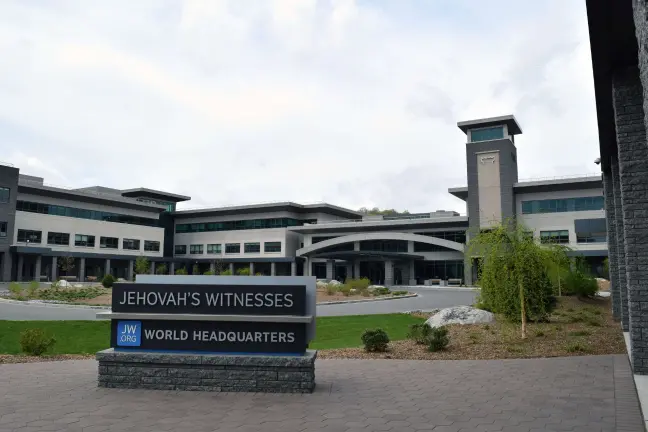 Watchtower world headquarters, Warwick, New York. Via Wikimedia Commons. CC-BY-SA 4.0.
In July 2009, the organization purchased a 253-acre forested property in Sterling Forest, Warwick, New York — approximately 50 miles northwest of Brooklyn. Construction began on July 29, 2013 and the campus officially opened on September 1, 2016, four months ahead of schedule.[7]
The campus consists of eight buildings on approximately 45 acres of the 253-acre site, including an administration/office building, a services building (kitchen, laundry, infirmary, storage), four residential buildings with approximately 588 units for 800-850 residents, a vehicle maintenance building, and a powerhouse. The facility includes underground parking, recreation areas, and three self-guided museum exhibits.[8]
The project was built by more than 27,000 volunteers from across the United States — skilled construction workers, tradespeople, and laborers who donated their time and expertise without pay. At peak construction, approximately 2,500 workers were on site each day, with about 500 temporary volunteers arriving each week. The reported construction cost was approximately $11.5 million — a figure that reflects only materials and permitting costs, not the value of the volunteer labor that would have cost tens or hundreds of millions at market rates.[9]
The town-mandated performance bond for the project was $33.1 million, suggesting the actual scope of the construction was far more substantial than the $11.5 million figure implies.[10]
The Wallkill Printing Complex
The organization's Wallkill, New York facility — approximately 90 miles northwest of Brooklyn — serves as the primary printing and shipping center for Watchtower publications in the United States. Printing operations were moved from Brooklyn to Wallkill in 2004. The complex houses over 1,600 Bethelites and has been expanded multiple times using volunteer labor, including a three-story office building, parking garage, residence building, technical-equipment building, and a 200-seat dining room addition completed by 2012.[11]
Volunteer Labor: The Hidden Subsidy
The Watchtower's financial model depends fundamentally on unpaid or minimally compensated labor at every level of the operation:
Bethelite workers serve at headquarters, branch offices, and printing facilities worldwide. They typically commit to multi-year assignments, during which they receive a modest monthly allowance (historically ~$150/month in the U.S.) plus room and board. They receive no salary, no benefits, no retirement contributions, and no Social Security credits for their years of service. Workers who leave after decades of service often find themselves with no work history, no savings, no pension, and limited job skills transferable to the secular workforce.
Regional Building Committees (RBCs) — now called Local Design/Construction departments — coordinate the construction and renovation of Kingdom Halls using volunteer labor from local congregations. Members with construction skills donate their weekends and vacation time. The organization assesses the value of this labor at market rates "for insurance purposes" but does not compensate the workers. The materials may be purchased at wholesale prices with vendor discounts returned to headquarters rather than to the local project.
Assembly Hall and convention labor is provided by congregation members assigned to departments (attendants, cleaning, parking, food service before it was discontinued) for no compensation. Members are told this is "sacred service" and a privilege.
The economic value of this labor is enormous but deliberately uncalculated. The Warwick project alone used 27,000 volunteers. At even modest construction wages, the labor value of that project would have been hundreds of millions of dollars — yet the reported cost was $11.5 million. This differential represents a hidden subsidy from members to the organization — one that is not acknowledged, not compensated, and not disclosed in any financial reporting.
Kingdom Hall Ownership and Consolidation
The Title Transfer
For decades, local congregations built and paid for their own Kingdom Halls — often using volunteer labor from members and loans from the organization's Kingdom Hall Fund. However, through a series of policy changes, the organization has systematically taken legal title to Kingdom Hall properties worldwide:
- In the United States, after the Bonham, Texas case (where a majority of a congregation voted to leave and took their Kingdom Hall with them), the organization required every U.S. congregation to add the Watch Tower Society to the deed as a beneficiary in trust — meaning if the congregation dissolves or leaves, the property reverts to headquarters
- In 2014, all U.S. congregations were notified that they would remit fixed, permanent monthly donations to headquarters — even if their Kingdom Hall was fully paid off. All local funds exceeding $5,000 were to be forwarded to the organization
- In the United Kingdom, 1,279 Jehovah's Witness congregation charities were merged into the Kingdom Hall Trust on a single day in March 2022 — one of the largest charity mergers in UK history. The Trust took legal ownership of all properties. The consolidated annual income was estimated at approximately £146 million
- In Poland, a 2015 letter to all Bodies of Elders explicitly stated that all real estate used by congregations is legally owned by "Jehovah's Witnesses in Poland"[12]
The Consolidation Program
The organization has pursued an aggressive program of merging congregations and selling surplus Kingdom Halls, with proceeds flowing to headquarters:
- Congregations are merged — sometimes over the objections of local elders — and directed to share a single Kingdom Hall
- The vacated Kingdom Hall is sold at market value
- The sale proceeds go to the organization, not to the congregation members who built, paid for, and maintained the property
- In the Menlo Park, California case (2010), when local elders resisted the merger, the organization removed them from their positions and replaced them with elders from a neighboring congregation. Three former elders filed federal lawsuits to stop the takeover
- Watchtower's own general counsel described the organization's structure in court as "a hierarchal religion structured just like the Catholic Church"[13]
Financial Opacity
The Watchtower organization provides no public financial statements, undergoes no independent auditing accessible to members, and discloses no details about how donations are allocated. Members are told their contributions support "the worldwide work" but are given no specifics about expenditures, investments, real estate transactions, or legal settlement costs.
The organization's IRS Form 990-T filings (required for unrelated business income) describe the Watchtower Bible and Tract Society's primary unrelated business activity as "Investment Activities." The Scientology Money Project, analyzing available public filings, estimated Watchtower Bible and Tract Society of New York's assets at approximately $1.45 billion — a figure that does not include the separate Watchtower Bible and Tract Society of Pennsylvania (estimated at approximately $1 billion) or the Christian Congregation of Jehovah's Witnesses (CCJW), the International Bible Students Association (IBSA), or dozens of other legal entities the organization operates worldwide. The true total net worth is unknown but likely exceeds $2–3 billion.[14]
In 2002, Newsday magazine listed the Watchtower among the top 40 companies in New York by annual revenue, at position #34 with reported revenue of $951 million — at a time when the organization had approximately 6 million members worldwide.[15]
The Arbitrage Model
The financial operation, viewed in its totality, functions as a real estate arbitrage using religious tax exemption, free labor, and donated capital:
| Input | Source | Cost to Organization |
|---|---|---|
| Property acquisition | Member donations (tax-deductible for donors) | $0 net (donated funds) |
| Property improvement | Volunteer labor (Bethelites at ~$150/month; volunteer construction crews unpaid) | Fraction of market rate |
| Property taxes | Religious exemption | $0 |
| Capital gains taxes on sale | Religious exemption | $0 |
| Transfer taxes on sale | Religious exemption | $0 |
| Output | Brooklyn sales alone | $2+ billion |
The members who donated the funds, performed the labor, and maintained the properties have no ownership interest, no financial claim, no vote on how proceeds are used, and no access to financial statements showing where the money went. The organization that benefited from their generosity has no external accountability mechanism requiring it to disclose how those proceeds are used.
See Also
- The Governing Body — Structure, History & Power — The body that controls the finances
- Legal Battles & Financial Penalties — How legal costs are funded from this war chest
- Daily Life & Culture Inside the Organization — The lived experience of members who fund the enterprise
- Estimating Watchtower's Global Wealth — Donation income modeling, surplus analysis, and estimated total net worth
- Information Control & Thought Reform — How financial opacity is maintained
References
1. ↩ Donation model and Bethelite stipends described in "THE GOVERNING BODY'S NEW FOCUS ON MONEY," My Beloved Religion: 2014 Scandinavian Branch letter introduced new donation system. Also JW Watch (2020): 2014 U.S. policy requiring fixed monthly donations and forwarding of funds exceeding $5,000. Bethelite stipend confirmed by multiple former Bethelites; also Scientology Money Project. [mybelovedreligion.no]
2. ↩ "The Jehovah's Witnesses and Brooklyn Are Ending Their Relationship," Commercial Observer (September 2016): 37 properties; 4.5 million square feet; century of acquisition; $1.25 billion through 2016. Also Crain's New York Business (October 2011): "well over $1 billion." [commercialobserver.com]
3. ↩ "Jehovah's Witnesses Sell 25/30 Columbia Heights," JW.org: former Squibb complex purchased 1969; Watchtower sign installed. Also The Real Deal (April 2016): purchased for $3 million; "WATCHTOWER" sign visible from Brooklyn Bridge. [therealdeal.com]
4. ↩ Major sales compiled from Brooklyn Eagle, New York City Finance Department records, Brownstoner, The Real Deal, and Commercial Observer: DUMBO complex $375M (2013); 85 Jay $345M (2016); 25-30 Columbia Heights $340M (2016); 90 Sands $135M (2017); 124 Columbia Heights $105M (2016); 107 Columbia Heights $87.5M (2017); 98 Front $60M (2017); The Standish $50M (2007). [brooklyneagle.com]
5. ↩ Brooklyn Eagle: total sales at least $2.19 billion per NYC Finance Department records. Commercial Observer: ~$1.25 billion through 2016. Crain's: "well over $1 billion" estimated as early as 2011. [brooklyneagle.com]
6. ↩ The Real Deal (April 2016): estimated $230 million in foregone transfer and capital gains taxes on 21 sites sold since 2004; $375 million in property tax savings over final 12 years. [therealdeal.com]
7. ↩ "Jehovah's Witnesses Begin Construction in Warwick," JW.org: 253 acres purchased July 17, 2009; construction began July 29, 2013; completed September 1, 2016 (four months ahead of schedule). [jw.org]
8. ↩ "Jehovah's Witnesses new world HQ nearly complete," Warwick Advertiser (June 2016): eight buildings on 45 acres; 800-850 residents; four residence buildings; office building; services building. Also JW.org Warwick photo gallery. [warwickadvertiser.com]
9. ↩ Warwick Advertiser: 27,000+ volunteers; 2,500 workers per day at peak; 500 temporary volunteers per week. Brooklyn Eagle report cited by Warwick Advertiser: $11.5 million construction cost. [warwickadvertiser.com]
10. ↩ "Jehovah Witness World HQ project moving forward," Warwick Advertiser (June 2014): $33.103 million performance bond mandated by town. [warwickadvertiser.com]
11. ↩ "Wallkill and Warwick Projects Move Forward," JW.org: Wallkill complex houses 1,600+ Bethelites; printing moved from Brooklyn 2004; expansions including office, parking, residence buildings. [jw.org]
12. ↩ UK: "Over 1,000 charities combine in one of largest mergers ever," Civil Society News (October 2022): 1,279 congregation charities merged into Kingdom Hall Trust on single day; ~£146M income. US 2014 policy: JW Watch (2020). Poland 2015: AvoidJW.org, "Legally Establishing Watchtower Assets." [civilsociety.co.uk]
13. ↩ Menlo Park case: AvoidJW.org, "Legally Establishing Watchtower Assets": elders removed; replaced by neighboring congregation; lawsuits filed. Watchtower general counsel: "a hierarchal religion structured just like the Catholic Church." [avoidjw.org]
14. ↩ "The Watchtower Bible & Tract Society: $1.45 Billion in Assets," Scientology Money Project (November 2018): 990-T filings; "Investment Activities" as primary unrelated business; NY corporation assets ~$1.45B; PA corporation ~$1B additional. [scientologymoneyproject.com]
15. ↩ Newsday (2002): Watchtower listed #34 among top 40 New York companies by annual revenue; $951 million; cited in Scientology Money Project. [scientologymoneyproject.com]
16. ↩ Arbitrage model analysis compiled from the financial data cited above and JWfacts.com analysis of Watchtower finances. [jwfacts.com]