The New World Translation — Bias & Controversy
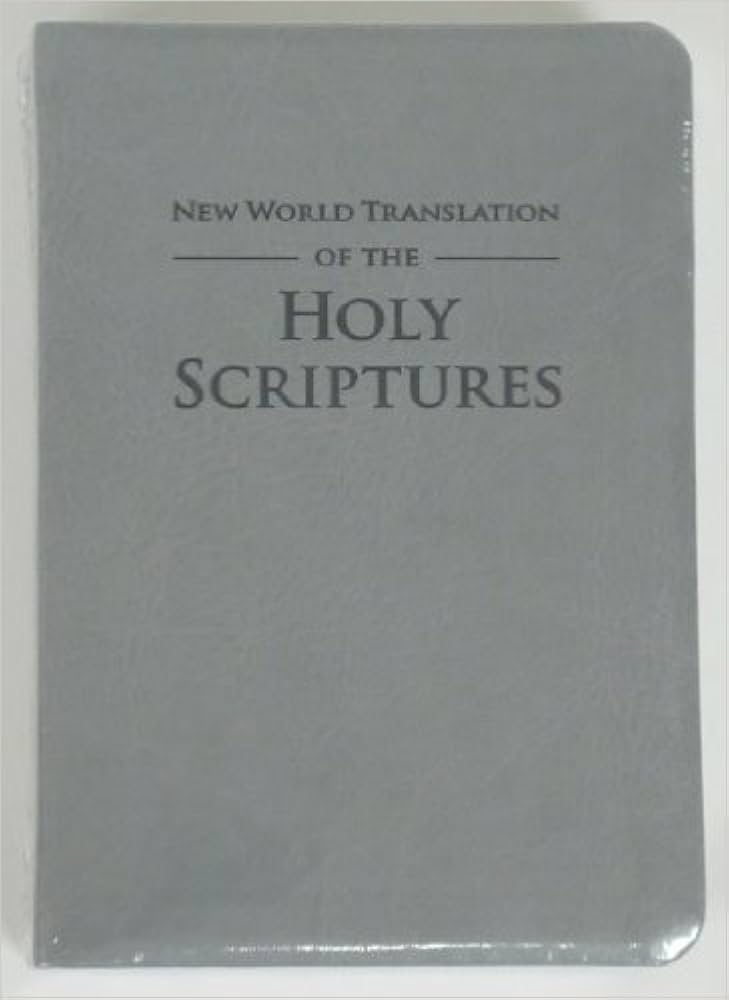 New World Translation, 2013 revision. Via Wikimedia Commons. CC-BY-SA 4.0.
The New World Translation of the Holy Scriptures (NWT) is the Bible translation produced by the Watchtower organization and used exclusively by Jehovah's Witnesses worldwide. Published anonymously by a "New World Bible Translation Committee" whose members the organization has refused to officially identify, the translation has been criticized by mainstream biblical scholars for systematically altering key passages to conform to Watchtower theology — most notably rendering John 1:1 as "the Word was a god" rather than "the Word was God," inserting the name "Jehovah" 237 times into the New Testament where no Greek manuscript supports it, and adding the word "[other]" to Colossians 1:16-17 to deny Christ's role as Creator. The sole committee member with any biblical language training — Frederick W. Franz — was unable to translate a simple Hebrew verse when tested under oath in a Scottish courtroom. By producing and exclusively using its own text of Scripture, the organization creates a framework in which every Bible study, every meeting, and every personal devotion reinforces the conclusions the Governing Body has already reached.
The Translation Committee
Anonymity and Identification
The Watchtower organization has never officially disclosed the identity of the New World Bible Translation Committee. When Frederick Franz was asked under oath in the 1954 Douglas Walsh trial in Scotland why the committee's identity was kept secret, he replied: "Because the committee of translation wanted it to remain anonymous and not seek any glory or honour at the making of a translation." The attorney responded: "Writers of books and translators do not always get glory and honour for their efforts, do they?"[1]
Despite the official secrecy, the committee members have been identified by multiple sources — including former Governing Body member Raymond Franz — as:
| Name | Role | Biblical Language Training |
|---|---|---|
| Frederick W. Franz | Primary translator; later 4th President of the Watch Tower Society | Attended University of Cincinnati for two years (did not graduate); studied some classical and biblical Greek under Professors Kensella and Harry; self-taught in Hebrew; no degree in any language |
| Nathan H. Knorr | Committee member; 3rd President of the Watch Tower Society | None — did not attend college; no training in Hebrew or Greek |
| Albert D. Schroeder | Committee member; later Governing Body member | None — no training in Hebrew or Greek |
| George D. Gangas | Committee member; later Governing Body member | None — native Modern Greek speaker (not biblical Koine Greek) |
| Milton G. Henschel | Committee member; later 5th President of the Watch Tower Society | None — no training in Hebrew or Greek |
Historian M. James Penton, a former Jehovah's Witness, concluded: "To all intents and purposes the New World Translation is the work of one man — Frederick Franz."[3]
The Walsh Trial: Franz Under Oath (1954)
The most revealing public examination of Frederick Franz's qualifications occurred during the Douglas Walsh v. The Right Honourable James Latham Clyde trial in the Scottish Court of Sessions in November 1954. The case concerned whether Jehovah's Witnesses qualified for ministerial exemption from national service. Franz, called as an expert witness, was questioned about his language abilities.
On the first day of his testimony, Franz claimed:
Q: I think you are able to read and follow the Bible in Hebrew, Greek, Latin, Spanish, Portuguese, German, and French?
A: Yes.
The next day, the cross-examiner tested this claim:
Q: You, yourself, read and speak Hebrew, do you?
A: I do not speak Hebrew.
Q: You do not?
A: No.
Q: Can you, yourself, translate that into Hebrew?
A: Which?
Q: That fourth verse of the second chapter of Genesis?
A: You mean here?
Q: Yes.
A: No, I won't attempt to do that.
A Hebrew professor at Biola College/Talbot Theological Seminary, when asked about this verse, stated that he "would never pass a first-year Hebrew student who could not translate that verse." Genesis 2:4 is a straightforward narrative text, not an obscure or technically difficult passage.[6]
Franz was also asked about his role in the translation:
Q: Were you yourself responsible for the translation of the Old Testament?
A: Again I cannot answer that question.
He refused to confirm or deny his involvement, citing the committee's desire for anonymity.[7]
Publication History
| Year | Publication | Notes |
|---|---|---|
| 1950 | New World Translation of the Christian Greek Scriptures | New Testament released at Yankee Stadium convention, August 2, 1950 |
| 1953 | Hebrew Scriptures, Volume 1 | Old Testament released in five installments |
| 1955 | Hebrew Scriptures, Volume 2 | |
| 1957 | Hebrew Scriptures, Volume 3 | |
| 1958 | Hebrew Scriptures, Volume 4 | |
| 1960 | Hebrew Scriptures, Volume 5 | Old Testament complete |
| 1961 | Complete single-volume NWT | First complete edition |
| 1984 | Reference Bible edition | Extensive cross-references and appendices added |
| 2013 | Major revision | Simplified language; removed brackets from inserted words (e.g., "[other]"); further aligned with current Watchtower theology |
As of 2025, the NWT has been published in whole or in part in over 130 languages. In the organization's earlier decades, Jehovah's Witnesses primarily used the King James Version. However, from 1944 onward, the organization began publishing and preferring the American Standard Version (1901), specifically because the ASV rendered the Tetragrammaton as "Jehovah" throughout the Old Testament — making it doctrinally congenial. GotQuestions.org notes that the ASV's use of "Jehovah" "made the ASV the favorite of the Jehovah's Witnesses." The ASV served as the primary Bible in the years immediately preceding the NWT and influenced the NWT's own translation approach.[8]

Coping with toxic family dynamics, estrangement, and rebuilding your life. For anyone dealing with the fallout of leaving a high-control group.
View on Amazon →Controversial Translation Choices
John 1:1 — "The Word Was a God"
The most widely criticized rendering in the NWT is John 1:1c. Where virtually every major English Bible translates the Greek (καὶ θεὸς ἦν ὁ λόγος) as "and the Word was God," the NWT renders it "and the Word was a god." The justification offered by the Watchtower is that the Greek noun theos (God) lacks the definite article in the final clause of John 1:1, and that therefore an indefinite article ("a") should be supplied.[9]
This rendering has been rejected by a broad consensus of Greek scholars, including many whose works the Watchtower itself has cited:
- Bruce Metzger (Princeton Theological Seminary, widely considered the foremost textual critic of the 20th century): the NWT rendering is "a frightful mistranslation." If taken seriously, "they are polytheists."
- Julius R. Mantey (co-author of A Manual Grammar of the Greek New Testament, a standard seminary textbook): "It is neither scholarly nor reasonable to translate John 1:1 'The Word was a god.'" Mantey wrote directly to the Watchtower requesting that they stop quoting his grammar in support of their rendering, stating they had been taking him "out of context" for 24 years.
- C. H. Dodd (University of Cambridge): the passage states that the nature (ousia) of the Word is rightly denominated God; the Nicene Creed's formula "of one substance with the Father" is "a perfect paraphrase."
- Donald Guthrie (London Bible College): "The absence of the article with Theos has misled some into thinking that the correct understanding of the statement would be that 'the word was a God' (or divine), but this is grammatically indefensible since Theos is a predicate."
- Randolph O. Yeager (Greek professor): "Only sophomores in Greek grammar are going to translate '…and the Word was a God.'"[10]
Insertion of "Jehovah" in the New Testament (237 Times)
The NWT inserts the name "Jehovah" (an English rendering of the Hebrew Tetragrammaton YHWH) 237 times in the New Testament, replacing the Greek word κύριος (kyrios, "Lord"). No existing Greek manuscript of the New Testament contains the Tetragrammaton. The NWT committee justified this practice by hypothesizing that the original New Testament authors must have written God's name and that later Christian copyists replaced it with kyrios.[12]
While some pre-Christian Greek Septuagint manuscripts do preserve the Tetragrammaton in Hebrew letters, scholar Albert Pietersma has argued that "the translators felt no more bound to retain the tetragram in written form than they felt compelled to render distinctively Hebrew el, Elohim or Shaddai," and that manuscripts containing the Tetragrammaton represent "a secondary stage" rather than the original practice.
Even Jason BeDuhn — a scholar who in 2003 described the NWT as overall "the most accurate of the translations compared" in a study of nine English versions — stated that the insertion of "Jehovah" into the New Testament was "not accurate translation by the most basic principle of accuracy" and that it "violate[s] accuracy in favor of denominationally preferred expressions for God."[13]
The practical effect of this insertion is theologically significant. In multiple New Testament passages, kyrios is applied to Jesus Christ. By replacing kyrios with "Jehovah" in some instances but leaving it as "Lord" (applied to Jesus) in others, the NWT creates a distinction between Jesus and the Father that is not present in the Greek text. For example, Romans 10:13 ("everyone who calls on the name of Jehovah will be saved" in the NWT) replaces kyrios — which in the context of Romans 10:9-12 refers to Jesus — with "Jehovah," deflecting a passage about calling on Christ into a passage about calling on the Father.
Colossians 1:15-17 — Insertion of "[Other]"
In the 1984 NWT, the word "[other]" was inserted four times in Colossians 1:15-17 to make the text read that Christ created "all [other] things" rather than "all things." The brackets indicated that the word was not in the original Greek. The theological purpose was to support the Watchtower teaching that Christ is himself a created being (identified as Michael the archangel) rather than the uncreated Creator of all things.[14]
In the 2013 revision, the brackets were removed — the word "other" now appears without any indication that it has been added to the text. A reader encountering the 2013 NWT for the first time would have no way of knowing that the Greek text of Colossians 1:16 simply says "all things" (ta panta), not "all other things."
The organization itself has been remarkably candid about why the word is there. A 1964 Awake!, in an article titled "Why the New World Translation Reads 'All Other,'" conceded that "Trinitarians complain because the word 'other' repeatedly appears even though this word is not found in the Greek text itself" — and then defended the insertion on frankly doctrinal grounds: "Since God is indeed Jesus' Father and Jesus is God's firstborn, it follows that Jesus is a creation, and, therefore, when Paul says that all things were created through Jesus he must have meant all other things."[36]
In other words, the word is supplied not because the Greek requires it but because Watchtower doctrine — that Jesus is a created being — requires the verse to say it. The same article had opened by listing a translator's "increased understanding of God's will and purposes" as one of its stated reasons for adopting a new rendering, effectively arguing that doctrine may govern how a passage is translated. It then closed with a caution that, read against its own subject, is self-indicting: a translator who works without a proper understanding of God's purposes, it warned, "exposes him to the temptation to 'slant' a text so as to support unscriptural teachings."[36]
Proskuneō — "Do Obeisance" vs. "Worship"
The Greek word proskuneō (προσκυνέω) appears approximately 60 times in the Greek New Testament. When applied to Jehovah God, the NWT consistently renders it "worship." When applied to Jesus Christ, the NWT renders it "do obeisance" — a deliberately less exalted term that avoids attributing worship to Christ and thereby supports the Watchtower teaching that Jesus is not God.[15]
The word proskuneō has a range of meaning that includes both formal worship and respectful homage; context determines which sense applies. The NWT's rendering is not inherently wrong for every occurrence — some instances clearly describe respectful gestures rather than divine worship. However, the systematic pattern of rendering proskuneō as "worship" when directed to God but "obeisance" when directed to Jesus is consistent with a theological agenda driving translation choices rather than translation choices driving theological conclusions.
Luke 23:43 — Moving the Comma
The NWT renders Jesus's words to the criminal on the cross as: "Truly I tell you today, you will be with me in Paradise." Every major translation places the comma before "today": "Truly I tell you, today you will be with me in paradise" (NIV, NASB, ESV). By moving the comma after "today," the NWT transforms Jesus's promise of immediate paradise into a vague future promise — Jesus merely made the statement "today" but paradise comes at some unspecified later time.[22]
This supports the JW doctrine of soul sleep — that the dead are unconscious until resurrection. While ancient Greek manuscripts had no punctuation, the grammar strongly favors the traditional placement. The Greek construction amēn soi legō ("truly I tell you") is a formulaic phrase Jesus uses 74 times in the Gospels, always as a complete introductory clause — he never adds "today" to the formula elsewhere.[22]
Acts 20:28 — Inserting "Son" Into the Text
The NWT renders this: "the congregation of God, which he purchased with the blood of his own Son." The Greek reads dia tou haimatos tou idiou — literally "through his own blood." The word "Son" (huios) does not appear in the Greek text. The NIV, NASB, ESV, and KJV all render it "his own blood" without adding "Son."[23]
If rendered literally, the verse says God purchased the church "with his own blood" — implying that Christ who shed blood is God. The NWT inserts "Son" (without brackets in the 2013 revision) to create distance between God and Jesus, avoiding this implication.
Genesis 1:2 — "God's Active Force" Instead of "Spirit of God"
The NWT renders the Hebrew ruach elohim as "God's active force" rather than "Spirit of God." Every major translation (NIV, NASB, ESV, KJV) renders it "Spirit of God." The NWT's own footnote acknowledges "Or 'God's spirit'" as an alternative, revealing that the translators knew the standard rendering but deliberately chose otherwise.[24]
This supports the JW denial that the Holy Spirit is a person. By rendering ruach as an impersonal "active force" from the very first chapter of the Bible, the NWT sets the stage for the systematic depersonalization of the Holy Spirit throughout the text. This pattern continues in passages like Hebrews 9:14, where the NWT uses lowercase "spirit" where mainstream translations capitalize "Spirit" as a reference to the Holy Spirit.
Colossians 2:9 — "Divine Quality" Instead of "Deity"
The NWT renders this: "because it is in him that all the fullness of the divine quality dwells bodily." The Greek word is theotēs — meaning "deity, divine nature, Godhead." Every major translation uses "deity" (NIV/NASB), "the Deity" (ESV footnote), or "Godhead" (KJV). The NWT downgrades this to "divine quality," implying Jesus possesses godlike qualities rather than being fully God.[25]
The BDAG lexicon defines theotēs as "the state of being God, deity" — distinct from the weaker theiotēs (divinity/divine nature — used in Romans 1:20). These are two different Greek words, and the distinction matters precisely because Paul chose the stronger term.
Matthew 24:3 — "Presence" Instead of "Coming"
The NWT renders this: "What will be the sign of your presence and of the conclusion of the system of things?" Where mainstream translations use "coming" or "advent" for the Greek parousia, the NWT consistently renders it as "presence."[26]
This is foundational to the entire JW 1914 doctrine. If parousia means "coming," then Jesus hasn't returned yet. If it means "presence," then Jesus could have invisibly "arrived" in 1914 and been present ever since — which is exactly what JW doctrine teaches. Most scholars translate parousia as "coming" or "advent" in eschatological contexts.
Stauros — "Torture Stake" Instead of "Cross"
The NWT consistently renders stauros as "torture stake," teaching that Jesus died on an upright stake without a crossbeam. However, the NWT's own text undermines this claim. In John 20:25, Thomas refers to "the print of the nails" (plural: hēlōn) in Jesus's hands. If Jesus were executed on a single stake with both hands fixed above his head, only one nail would be needed. The plural "nails" implies separate nailing of each hand, consistent with a crossbeam. Additional evidence includes the Alexamenos graffito (c. 200 CE, the earliest known depiction of crucifixion, showing a cross shape), the archaeological heel bone of Yehohanan (1st century CE, showing crucifixion-consistent nail positioning), and early church fathers Justin Martyr and Irenaeus, who within 100 years of the events consistently described a cross shape.[27]
Other Notable Renderings
| Passage | Mainstream Translation | NWT Rendering | Purpose |
|---|---|---|---|
| John 8:58 | "Before Abraham was, I am" | "Before Abraham came into existence, I have been" | Avoids connection to Exodus 3:14 ("I AM") which identifies Jesus with Jehovah |
| Philippians 2:6 | "Who, being in the form of God, did not consider equality with God something to be grasped" | "Who, although he was existing in God's form, gave no consideration to a seizure, namely, that he should be equal to God" | Implies Jesus never was or could be equal to God |
| Titus 2:13 | "Our great God and Savior, Jesus Christ" | "The great God and of the Savior of us, Christ Jesus" | Separates "God" from "Jesus Christ" to avoid identifying Christ as God; violates the Granville Sharp rule of Greek grammar |
| 2 Peter 1:1 | "Our God and Savior Jesus Christ" | "Our God and the Savior Jesus Christ" | Inserts "the" to break the Granville Sharp rule, making God and Jesus appear to be two separate beings |
| Hebrews 1:8 | "Your throne, O God, is forever" | "God is your throne forever" | Changes vocative address to Christ as God into a statement about God being Christ's throne |
| Romans 9:5 | "Christ, who is God over all, forever praised" | "God, who is over all, be praised forever" | Restructures doxology to refer to the Father rather than identifying Christ as God |
| Colossians 2:9 | "The fullness of the Deity" | "The fullness of the divine quality" | Downgrades Christ's nature from deity to a mere quality |
| Acts 7:59-60 | Stephen prays to Lord Jesus in both verses | Stephen prays to Lord Jesus (v.59) then to Jehovah (v.60) | Inserts "Jehovah" in v.60 to split Stephen's prayer, avoiding the implication that early Christians prayed to Jesus |
| Revelation 3:14 | "The ruler of God's creation" (NIV) | "The beginning of the creation by God" | Implies Jesus was the first thing God created; changes "of God" to "by God" to emphasize God as agent |
The "Jehovah" Insertions — Additional Problems
Beyond the fundamental problem of inserting "Jehovah" where no Greek manuscript supports it, the methodology reveals further issues. Only 76 of the 237 insertions involve direct Old Testament quotations — the stated basis for the practice. The remaining 161 insertions have no Old Testament source containing YHWH, contradicting the Watchtower's own stated methodology.[28]
The NWT cites what it calls "J-references" (J1 through J27) — Hebrew translations of the New Testament dating from 1385 CE onward — as support for these insertions. However, these are secondary translations derived from Greek manuscripts that already lacked YHWH. Citing a 14th-century reverse translation as evidence for 1st-century originals is circular reasoning.[28]
Scholar George Howard, whose 1977 thesis explored whether YHWH appeared in OT quotations within the NT, was frequently cited by the Watchtower. However, apologetics sources report that in a 1997 personal letter Howard is said to have written: "The Jehovah's Witnesses have made too much out of my articles" and that his research "does not support them." The letter itself does not appear to have been independently published; these quotations are reproduced from secondary apologetics sources rather than verified against the primary document.[29]
The insertions are also applied inconsistently in ways that reveal theological rather than linguistic motivation. The NWT inserts "Jehovah" in Romans 10:13 ("everyone who calls on the name of Jehovah will be saved") to avoid implying that calling on Jesus saves. However, the NWT does not insert "Jehovah" in Philippians 2:9-11, which quotes the same Isaiah 45 passage — because doing so there would directly equate Jesus with Jehovah.[28]
The Kingdom Interlinear Translation — Self-Refuting Evidence
The Watchtower published the Kingdom Interlinear Translation of the Greek Scriptures (KIT), which places a word-for-word English rendering under the Greek text alongside the NWT in a parallel column. This publication inadvertently became one of the most powerful tools for demonstrating NWT bias, because readers can compare the literal Greek rendering with the NWT's interpretive rendering on the same page.[30]
Key discrepancies between the interlinear and the NWT column:
- John 1:1 — The interlinear literally reads "god was the Word" but the NWT column says "a god was the Word"
- Colossians 1:16-17 — The interlinear shows no "other" but the NWT column inserts it four times
- Acts 20:28 — The interlinear shows "the blood of the own" (no "Son") but the NWT column adds "Son"
- Acts 7:59-60 — The interlinear shows kyrios ("Lord") in verse 60 but the NWT column inserts "Jehovah"
The Johannes Greber Scandal
One of the most damaging episodes in the NWT's history involves Johannes Greber (1874–1944), a former Catholic priest who became a spiritist after attending a seance in 1923. Greber published Communication with the Spirit World of God (1932) detailing his involvement in spirit communication, followed by a New Testament translation (1937) that he stated was produced with the assistance of "God's Spirit World" — spirits channeled through his wife, who served as a spirit medium.[31]
Condemned, Then Cited
The Watchtower explicitly condemned Greber as a spiritist in two articles:
- The Watchtower, October 1, 1955, p. 603: "It comes as no surprise that one Johannes Greber, a former Catholic clergyman, has become a spiritualist and has published the book entitled 'Communication with the Spirit World, Its laws and Its Purpose.'"[32]
- The Watchtower, February 15, 1956, pp. 110-111: This article quoted from Greber's introduction detailing his spirit communication and concluded: "Very plainly the spirits in which ex-priest Greber believes helped him in his translation."[33]
| Year | Publication | Verse Supported |
|---|---|---|
| 1961 | The Watchtower, January 1, p. 30 | Matthew 27:52-53 |
| 1962 | The Word — Who Is He? According to John, p. 5 | John 1:1 |
| 1962 | The Watchtower, September 15, p. 554 | John 1:1 |
| 1965 | Make Sure of All Things, p. 489 | John 1:1 |
| 1971 | Aid to Bible Understanding, pp. 1134, 1669 | Matthew 27:52-53 and John 1:1 |
| 1975 | The Watchtower, October 15, p. 640 | Matthew 27:52-53 |
| 1976 | The Watchtower, April 15, p. 231 | Matthew 27:52-53 |
The Belated Disavowal
In The Watchtower, April 1, 1983, p. 31, a "Questions From Readers" article finally stated that the organization had "deemed it improper to make use of a translation that has such a close rapport with spiritism." The article claimed they had only recently become aware — from the 1980 edition of Greber's New Testament — that his translation relied on spirit communication.[35]
This claim appears to be contradicted by the record. The Watchtower had documented Greber's spiritism in detail in 1955 and 1956. The organization's own publication index would have cross-referenced the prior condemnation. The 1983 article implied a recent discovery, yet the organization had cited Greber for 15 years after having itself identified his translation as connected to spiritism.
The episode represents a triple contradiction: (1) the Watchtower teaches that spiritism is demonic and absolutely forbidden (Deuteronomy 18:10-12); (2) the Watchtower explicitly condemned Greber as a spiritist in 1955 and 1956; (3) the Watchtower then cited his spirit-channeled translation for 15 years to support their own Bible. When they finally stopped, the 1983 article's claim of recent discovery is contradicted by the documented 1955-1956 articles.[34]
Scholarly Assessment
Scholarly opinion on the NWT ranges from guarded acknowledgment of some competent renderings to wholesale condemnation of its theological bias:
Robert Countess (author of The Jehovah's Witnesses' New Testament, the most detailed academic study of the NWT) concluded that the translation "has been sharply unsuccessful in keeping doctrinal considerations from influencing the actual translation… It must be viewed as a radically biased piece of work."[17]
H. H. Rowley (University of Manchester): "From beginning to end this volume is a shining example of how the Bible should not be translated… an insult to the Word of God."[18]
Jason BeDuhn (Northern Arizona University) offered the most favorable major scholarly assessment, describing the NWT as "a remarkably good translation" and "the most accurate of the translations compared" in his 2003 study — while simultaneously criticizing the insertion of "Jehovah" in the New Testament as a violation of "the most basic principle of accuracy." BeDuhn's assessment focused on passages where he believed bias was most likely to interfere with translation, and concluded that many of the NWT's distinctive renderings reflected "greater accuracy" as a literal translation rather than theological distortion. His work remains controversial among both NWT critics and defenders.[19]
The 2013 Revision
The 2013 revision represented the most significant overhaul of the NWT since its initial publication. Key changes included:
- Simplified language: The revision moved toward a more contemporary English style, removing archaisms and simplifying sentence structures.
- Removal of brackets from inserted words: The square brackets that had previously marked words not in the original text — most notably "[other]" in Colossians 1:16-17 — were removed. The added words now appear as though they are part of the original text.
- Alignment with current theology: Passages related to doctrines that had shifted since 1961 — such as the identity of the Faithful and Discreet Slave and the generation doctrine — were adjusted to accommodate the organization's current positions.
- Continued anonymity: The 2013 committee was also anonymous. No information about the translators' qualifications was provided.[20]
The NWT as a Doctrinal Instrument
The NWT functions as more than a Bible translation within the Jehovah's Witness ecosystem. It is the only Bible translation used in Watchtower publications, Kingdom Hall meetings, convention programs, and personal study recommendations. Members are not forbidden from owning other translations, but are strongly discouraged from using them for study purposes. The practical effect is a closed hermeneutical loop: the organization's theology is confirmed by its own translation, which was produced to support that theology, which is then taught from that translation.
When a Jehovah's Witness conducts a "Bible study" with a prospective member, the study material directs the student to look up passages in the NWT. The student encounters a text that has already been shaped to conform to the conclusions the study material will present. The student thus believes they are "letting the Bible speak for itself" when they are reading an organization-produced text through an organization-produced study guide.[21]
See Also
- Key Watchtower Publications — Historical Overview — The broader publishing enterprise
- Frederick William Franz (1893–1992) — The primary translator
- Information Control & Thought Reform — How the NWT functions within the control system
- The 607 BCE / 1914 Chronology Problem — A doctrine the NWT appendices were designed to support
- Major Doctrinal Reversals — Complete Registry — Doctrines the 2013 revision was adjusted to accommodate
- Misquotes & Intellectual Dishonesty — The broader pattern of misrepresenting sources
- Women's Role & Gender Inequality — The NWT's handling of Junia in Romans 16:7
References
1. ↩ Douglas Walsh v. The Right Honourable James Latham Clyde, M.P., P.C., Scottish Court of Sessions, November 1954, p. 92: Franz on anonymity; attorney's response. [forananswer.org]
2. ↩ Committee members identified by Raymond Franz (Crisis of Conscience) and multiple former Bethel sources; Franz's University of Cincinnati attendance confirmed in The Watchtower, May 1, 1987. Also "New World Translation," Wikipedia. [en.wikipedia.org]
3. ↩ M. James Penton, Apocalypse Delayed: The Story of Jehovah's Witnesses (University of Toronto Press): "the New World Translation is the work of one man — Frederick Franz." [pocketanswers.net]
4. ↩ Walsh trial transcript, Pursuer's Proof, pp. 7-9: Franz claimed ability to read Bible in Hebrew, Greek, Latin, Spanish, Portuguese, German, and French. [equip.org]
5. ↩ Walsh trial transcript, pp. 88, 91-92, 102-103: Franz admitted he could not speak Hebrew and refused to translate Genesis 2:4 from English into Hebrew. Multiple sources confirm transcript: Christian Research Institute, For an Answer, and Bible Ready. [forananswer.org]
6. ↩ Walter Martin, The Kingdom of the Cults: Hebrew professor at Biola/Talbot stated he would never pass a first-year student who couldn't translate Genesis 2:4. Also Christian Research Institute. [equip.org]
7. ↩ Walsh trial transcript, p. 92: Franz refused to confirm or deny role in translating Old Testament. [pocketanswers.net]
8. ↩ "Jehovah's Witnesses publications," Wikipedia: NWT publication history 1950–2013. Also "Noteworthy Events," JW.org. [en.wikipedia.org]
9. ↩ John 1:1 in the NWT: "the Word was a god." Watchtower's grammatical argument regarding the anarthrous theos. [neverthirsty.org]
10. ↩ Scholarly criticism of NWT John 1:1: Bruce Metzger ("frightful mistranslation," "polytheists"); Julius Mantey ("neither scholarly nor reasonable"; letter demanding Watchtower stop quoting him); C. H. Dodd ("perfect paraphrase" of Nicene formula); Donald Guthrie ("grammatically indefensible"); Randolph O. Yeager ("only sophomores"). Compiled from Christian Research Institute and multiple scholarly sources. [equip.org]
11. ↩ Robert Countess: theos without the article appears in approximately 282 instances in the Greek NT; NWT does not render "a god" in most. Also Christian Courier analysis. [christiancourier.com]
12. ↩ "New World Translation," Wikipedia: "Jehovah" inserted 237 times in NT; no extant Greek manuscript contains the Tetragrammaton; Pietersma on "secondary stage"; Paul Kahle's view cited. Also Updated American Standard Version analysis. [en.wikipedia.org]
13. ↩ Jason BeDuhn, Truth in Translation: Accuracy and Bias in English Translations of the New Testament (University Press of America, 2003): NWT "the most accurate of the translations compared" but insertion of "Jehovah" was "not accurate translation by the most basic principle of accuracy." Cited in Wikipedia. [en.wikipedia.org]
14. ↩ Colossians 1:15-17: "[other]" inserted four times in 1984 NWT; brackets removed in 2013 revision. Updated American Standard Version analysis. [uasvbible.org]
15. ↩ Proskuneō analysis: appears ~60 times in Greek NT; NWT renders "worship" when directed to God, "do obeisance" when directed to Jesus. BDAG lexicon definition and Psephizo analysis. [psephizo.com]
16. ↩ Comparison table compiled from NWT (1984 and 2013 editions) and mainstream translations (NASB, ESV, KJV, NIV). Also Department of Christian Defense analysis and NeverThirsty. [christiandefense.org]
17. ↩ Robert H. Countess, The Jehovah's Witnesses' New Testament: A Critical Analysis of the New World Translation of the Christian Greek Scriptures (Presbyterian and Reformed Publishing, 1982): "radically biased piece of work." [neverthirsty.org]
18. ↩ H. H. Rowley, review in The Expository Times: "a shining example of how the Bible should not be translated… an insult to the Word of God." [neverthirsty.org]
19. ↩ BeDuhn (2003): "remarkably good translation"; "most accurate of the translations compared"; criticism of "Jehovah" insertion as violating accuracy. Wikipedia summary and analysis. [en.wikipedia.org]
20. ↩ 2013 revision changes: simplified language, bracket removal, theological alignment, continued anonymity. Wikipedia and Updated American Standard Version analysis. [uasvbible.org]
21. ↩ Closed hermeneutical loop analysis drawn from JWfacts.com and Raymond Franz, Crisis of Conscience. [jwfacts.com]
22. ↩ Luke 23:43 comma placement analysis. The Greek formula amēn soi legō ("truly I tell you") is used 74 times in the Gospels as a complete introductory clause; Jesus never appends "today" to it elsewhere. See Christian Courier and NeverThirsty analyses. [christiancourier.com]
23. ↩ Acts 20:28: Greek dia tou haimatos tou idiou contains no word for "Son" (huios). The NWT inserts "Son" without textual basis. Analysis at NeverThirsty and Updated American Standard Version. [uasvbible.org]
24. ↩ Genesis 1:2: Hebrew ruach elohim rendered "God's active force" rather than "Spirit of God." NWT footnote acknowledges "Or 'God's spirit'" as an alternative. See JWfacts.com NWT analysis. [jwfacts.com]
25. ↩ Colossians 2:9: Greek theotēs (deity/Godhead) rendered as "divine quality." BDAG lexicon defines theotēs as "the state of being God, deity" — distinct from the weaker theiotēs (divinity) used in Romans 1:20. See Christian Defense analysis. [christiandefense.org]
26. ↩ Matthew 24:3: parousia rendered "presence" instead of "coming." Foundation of the JW invisible return doctrine. See JWfacts.com, "1914 — A Significant Year in Bible Prophecy?" [jwfacts.com]
27. ↩ Stauros rendered "torture stake": John 20:25 plural "nails" (hēlōn) contradicts single-stake theory; Alexamenos graffito (c. 200 CE) shows cross shape; Yehohanan heel bone archaeological evidence; Justin Martyr and Irenaeus describe cross shape within 100 years. See JWfacts.com, "Cross or Stake." [jwfacts.com]
28. ↩ "Jehovah" insertion methodology problems: only 76 of 237 involve OT quotations; J-references are 14th-19th century Hebrew reverse-translations; inconsistent application (Romans 10:13 vs. Philippians 2:9-11). See Christian Courier and Wikipedia, "New World Translation." [en.wikipedia.org]
29. ↩ George Howard, 1997 personal letter: "The Jehovah's Witnesses have made too much out of my articles" and his research "does not support them." Documented in multiple apologetics sources. [forananswer.org]
30. ↩ The Kingdom Interlinear Translation of the Greek Scriptures, Watchtower Bible and Tract Society (1969, revised 1985). Literal interlinear rendering frequently contradicts the NWT's interpretive translation on the same page. See JWfacts.com analysis. [jwfacts.com]
31. ↩ "Johannes Greber," Wikipedia. Former Catholic priest who became spiritist after attending a seance in 1923; published Communication with the Spirit World of God (1932) and a New Testament translation (1937) produced with the assistance of spirits channeled through his wife. [en.wikipedia.org]
32. ↩ The Watchtower, October 1, 1955, p. 603: "It comes as no surprise that one Johannes Greber, a former Catholic clergyman, has become a spiritualist." [bible.ca]
33. ↩ The Watchtower, February 15, 1956, pp. 110-111: "Very plainly the spirits in which ex-priest Greber believes helped him in his translation." Described his translation as "very spiritualistic." [bible.ca]
34. ↩ Greber citations documented across Watchtower publications 1961-1976: The Watchtower (1961, 1962, 1975, 1976), The Word — Who Is He? (1962), Make Sure of All Things (1965), Aid to Bible Understanding (1971). All cited favorably despite the 1955-1956 condemnation. See AvoidJW.org, "Watchtower Involved in Spiritism," and Watchman Fellowship analysis. [avoidjw.org]
35. ↩ The Watchtower, April 1, 1983, p. 31, "Questions From Readers": Organization "deemed it improper to make use of a translation that has such a close rapport with spiritism." Falsely implied recent discovery of Greber's spiritism despite having documented it in 1955-1956. [watchman.org]
36. ↩ "Why the New World Translation Reads 'All Other,'" Awake!, September 8, 1964, pp. 28-29: concedes the word "other" is "not found in the Greek text itself" and defends its insertion on the doctrinal premise that Jesus is "a creation"; warns against translating so as to "slant" a text.