Adventist Roots & Precursors
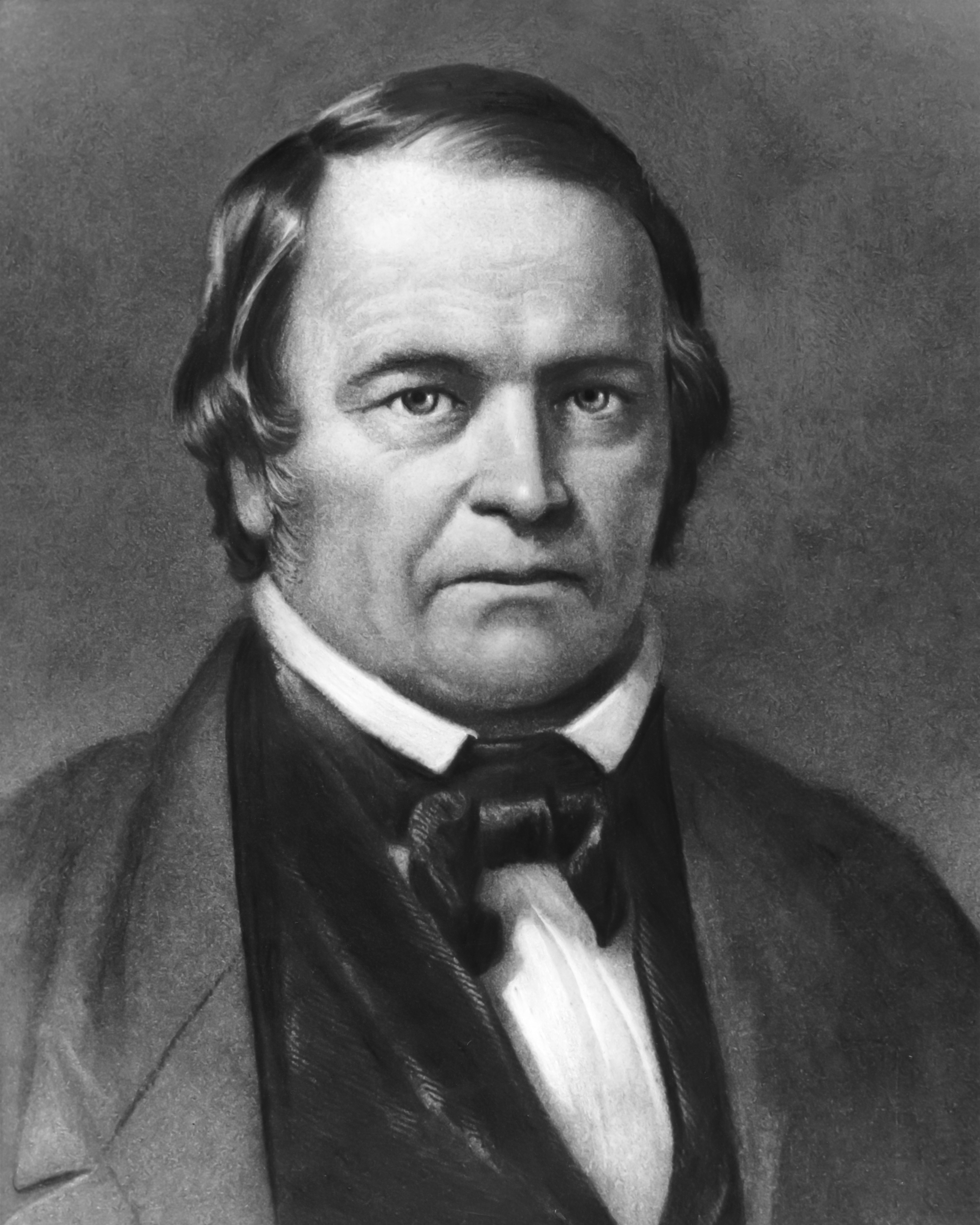 Portrait of William Miller.
The Jehovah's Witness movement did not emerge from a vacuum. Its core doctrines — prophetic date-setting, an invisible return of Christ, the year 1914, conditional immortality, and the rejection of hellfire — were all inherited from a chain of 19th-century Adventist preachers and writers stretching back to the 1820s. Understanding this lineage is essential for evaluating the Watchtower's repeated claim to have been uniquely guided by God to discover these "truths." Every major prophetic calculation the organization has ever published can be traced, link by link, to men the Watchtower rarely mentions.
The Second Great Awakening and Prophetic Fervor
The early 19th century saw a wave of religious enthusiasm sweep across the United States known as the Second Great Awakening. Camp meetings, revival preaching, and intense Bible study became commonplace, particularly in the so-called "Burned-over District" of upstate New York.[1] Amid this atmosphere, a conviction took hold among certain Protestants that the Bible contained a hidden timetable — that careful study of the prophetic books of Daniel and Revelation could reveal the precise date of Christ's return.
It was in this environment that a Baptist farmer and War of 1812 veteran named William Miller (1782–1849) began the chain of prophetic speculation that would ultimately produce the Jehovah's Witnesses.[2]
William Miller and the Great Disappointment
The Prophecy
After converting from Deism in 1816, Miller spent roughly fourteen years intensively studying the Bible, with particular focus on the Book of Daniel.[3] He zeroed in on Daniel 8:14: "Unto two thousand and three hundred days; then shall the sanctuary be cleansed." Applying the "year-day principle" — the idea that a prophetic day represents a literal year — Miller concluded that 2,300 years, counted from 457 B.C. (the supposed date of Artaxerxes I's decree to rebuild Jerusalem), would terminate around 1843.[4] He interpreted the "cleansing of the sanctuary" as the purging of the earth by fire at Christ's Second Coming.
Miller began preaching publicly in 1831 and initially stated that Christ would return "about the year 1843."[5] By January 1843, under pressure from followers, he narrowed this to the Jewish year running from March 21, 1843 to March 21, 1844.[6] When March 1844 passed without incident, a revised date of April 18, 1844, was briefly adopted based on the Karaite Jewish calendar.[7] That date also failed.
October 22, 1844
In August 1844, at a camp meeting in Exeter, New Hampshire, a follower named Samuel S. Snow presented what became known as the "seventh-month message," arguing from additional typological calculations that Christ would return on October 22, 1844.[8] This message spread rapidly among the Millerites — estimates of followers ranged from 50,000 to as many as 500,000 sympathizers.[9]
October 22 came and went. Christ did not appear. The event became known as the Great Disappointment. Hiram Edson, a Millerite in western New York, recorded the devastation among believers in words that would foreshadow many future Adventist failures: "Our fondest hopes and expectations were blasted, and such a spirit of weeping came over us as I never experienced before."[10]
The Pattern Is Set
The Great Disappointment established a pattern that would repeat through the entire lineage leading to the Jehovah's Witnesses:
- A specific prophetic date is calculated from Daniel or Revelation using the year-day principle.
- The date fails.
- Rather than abandon the chronology, followers reinterpret what happened — the date was right, but the event was wrong.
- The movement splinters, with some followers leaving entirely and a committed remnant doubling down.
Miller himself publicly admitted his error, writing: "I confess my error, and acknowledge my disappointment; yet I still believe that the day of the Lord is near, even at the door."[12] He died in 1849, but the Adventist movement he had ignited was far from over.

Coping with toxic family dynamics, estrangement, and rebuilding your life. For anyone dealing with the fallout of leaving a high-control group.
View on Amazon →John Aquila Brown and the 2,520-Year Calculation
A critical but often overlooked figure in the lineage is John Aquila Brown, a British writer who in 1823 published The Even-Tide; or, Last Triumph of the Blessed and Only Potentate, the King of Kings, and Lord of Lords.[13] Brown was the first expositor to apply the year-day principle to the "seven times" of Daniel chapter 4 — the story of Nebuchadnezzar's dream of a great tree cut down for "seven times." Brown calculated these seven times as 7 × 360 = 2,520 years, running from what he identified as the first year of Nebuchadnezzar's reign (604 B.C.) to 1917 A.D.[14]
Brown did not himself connect this 2,520-year period to the "Gentile Times" of Luke 21:24.[15] That linkage would come later. But his core calculation — seven prophetic times equaling 2,520 years — became the foundation stone on which Nelson Barbour, and later Charles Taze Russell, would build the entire 1914 doctrine that remains central to Jehovah's Witness theology today.
The Watchtower's own Proclaimers book briefly acknowledges Brown but dramatically understates his contribution, stating merely that Brown "calculated the 'seven times' of Daniel chapter 4 to be 2,520 years in length" but "did not clearly discern the date with which the prophetic time period began or when it would end."[16] This framing appears to imply that Russell and his associates independently arrived at these calculations through divine guidance — a narrative that is difficult to reconcile with the documented historical record.
George Storrs, Henry Grew, and Conditionalism
Another critical tributary feeding into what became the Bible Student movement was the doctrine of conditional immortality — the teaching that the human soul is mortal, that immortality is a gift granted only to the faithful, and that the wicked are simply destroyed rather than tormented forever in hell.
This teaching was championed by Henry Grew (1781–1862) of Philadelphia, who argued from Scripture alone that the doctrines of the immortal soul, hellfire, and the Trinity were unbiblical.[17] Grew's writings were picked up by George Storrs (1796–1879), a former Methodist preacher turned Millerite who became the most influential advocate of conditionalism in mid-19th-century America.[18]
Storrs published his arguments in the famous Six Sermons on the Inquiry: Is There Immortality in Sin and Suffering?, which eventually achieved a distribution of some 200,000 copies.[19] He also published a periodical called the Bible Examiner. Through Storrs' writings, the majority of post-Disappointment Millerites became conditionalists — rejecting eternal torment as unbiblical.[20]
The doctrinal line from Storrs to the Jehovah's Witnesses is direct and acknowledged. The Watchtower's own Proclaimers book states that Storrs' views on "the mortality of the soul as well as the atonement and restitution" had "a strong, positive influence on young Charles T. Russell."[21] Russell himself acknowledged learning "much of the mortality of the soul" from Storrs.[22] Today's Jehovah's Witness teachings on soul sleep, the non-existence of hellfire, and the destruction (rather than eternal torment) of the wicked are essentially George Storrs' theology, transmitted through Russell.
Jonas Wendell and the Rekindling of Russell's Faith
In 1869, a seventeen-year-old Charles Taze Russell — who had been raised Presbyterian but had drifted toward agnosticism after struggling with the doctrine of eternal torment — wandered into a basement meeting hall in Allegheny, Pennsylvania. There he heard a sermon by Jonas Wendell, a preacher affiliated with the Advent Christian Church (itself a post-Millerite denomination).[23]
Russell later described the encounter in his own words: "Seemingly by accident, one evening I dropped into a dusty, dingy hall, where I had heard religious services were held, to see if the handful who met there had anything more sensible to offer than the creeds of the great churches. There, for the first time, I heard something of the views of Second Adventists, the preacher being Mr. Jonas Wendell."[24]
Russell credited this experience with restoring his faith in the Bible, though he was careful to add that "Adventism helped me to no single truth" but rather "did help me greatly in the unlearning of errors, and thus prepared me for the Truth."[25] Russell subsequently joined an Adventist-oriented Bible study group in Allegheny led by George W. Stetson, a pastor of the Advent Christian Church in Edinboro, Pennsylvania.[26] It was through these Adventist circles that Russell encountered the ideas that would form the backbone of his later teachings.
Nelson H. Barbour and the Herald of the Morning
The most consequential figure in the chain between Millerism and the Watch Tower Society was Nelson Homer Barbour (1824–1905), a former Millerite who had personally experienced the Great Disappointment as a young man.[27]
Barbour's Prophetic Framework
After years of wavering faith following 1844, Barbour returned to prophetic study and in 1868–1869 published Evidences for the Coming of the Lord in 1873, predicting Christ's return in that year.[28] When 1873 passed without the expected event, Barbour — following the Millerite pattern — did not abandon his chronology. Instead, with the help of associate Benjamin W. Keith, he adopted the idea that Christ had returned in 1874, but invisibly.[29] This concept of an invisible "presence" (parousia) rather than a visible coming became a defining doctrine that Russell would later adopt wholesale.
Barbour launched a magazine called The Midnight Cry in the fall of 1873, quickly renaming it Herald of the Morning from January 1874 onward.[30] In the September 1875 issue, Barbour published a calculation that would change the course of religious history. Combining Brown's 2,520-year period with a new starting date of 606 B.C. (which he derived from an incorrect calculation of the fall of Jerusalem), Barbour arrived at the year 1914 as the end of the "Gentile Times."[31] The September 1875 Herald stated: "I believe that though the gospel dispensation will end in 1878, the Jews will not be restored to Palestine, until 1881; and that the 'times of the Gentiles,' viz. their seven prophetic times, of 2520, or twice 1260 years, which began where God gave all, into the hands of Nebuchadnezzar, 606 B.C.; do not end until A.D. 1914."[32]
This is the origin of 1914 in Watch Tower theology. It was not revealed to Russell by God or discovered through independent Bible study. It was published by Nelson Barbour in 1875, a full year before Russell even read the Herald of the Morning.
The Russell–Barbour Partnership
In January 1876, the 23-year-old Russell received a copy of the Herald of the Morning in the mail.[33] Recognizing ideas similar to those his own study group had been exploring, he telegraphed Barbour and arranged a meeting. Russell traveled to meet Barbour and associate John Henry Paton in the summer of 1876, and came away convinced of Barbour's chronological framework — including the invisible presence of Christ since 1874 and the ending of the Gentile Times in 1914.[34]
Russell immediately sold his five clothing stores — worth approximately $300,000 at the time (several million in today's currency) — to devote himself full-time to the work.[35] He became assistant editor and financial backer of the Herald of the Morning. With Russell's funding, Barbour wrote Three Worlds, and the Harvest of This World (1877), a 194-page book laying out their shared prophetic framework.[36] Though it bore both names, the book was written entirely by Barbour.[37]
Three Worlds proposed that Christ's invisible second coming had begun in 1874, that a forty-year "harvest" period had commenced, that the rapture of the saints would occur in 1878, and that the Gentile Times would end — with the destruction of worldly governments and the establishment of God's kingdom — in 1914.[38]
The Split
When 1878 arrived and the expected rapture did not occur, a familiar pattern repeated. Barbour, shaken, began to question the ransom doctrine — arguing that Christ's death was not a substitutionary atonement. Russell found this unacceptable.[39] After months of debate conducted through the pages of the Herald, Russell formally withdrew in May 1879, writing to Barbour: "Now I leave the 'Herald' with you. I withdraw entirely from it, asking nothing from you."[40]
In July 1879, Russell launched his own journal: Zion's Watch Tower and Herald of Christ's Presence — the publication that continues today, more than 145 years later, as The Watchtower Announcing Jehovah's Kingdom.[41] Russell took with him not only many of Barbour's subscribers and associates (including Paton and B. W. Keith) but also virtually the entire chronological framework Barbour had assembled: the invisible presence since 1874, the 2,520-year Gentile Times calculation, and the endpoint of 1914.
The Doctrinal Lineage: What Russell Inherited
It is worth cataloguing exactly what Charles Taze Russell received from his Adventist predecessors, because the Watchtower organization has a long history of obscuring these debts:
From John Aquila Brown (1823): The calculation of the "seven times" of Daniel 4 as a period of 2,520 prophetic years — the mathematical backbone of the entire 1914 doctrine.[42]
From William Miller and the Millerites (1831–1844): The year-day principle applied to Daniel's prophecies; the conviction that Bible chronology can predict specific future dates; and the post-failure pattern of reinterpreting what happened rather than admitting the date was wrong.[43]
From George Storrs and Henry Grew: Conditional immortality (the soul is mortal); rejection of hellfire; rejection of the Trinity; and the expectation of a future earthly restoration for humanity.[44]
From Jonas Wendell and the Advent Christian Church: The rekindling of Russell's faith and his introduction to Adventist eschatological thinking.[45]
From Nelson H. Barbour: The invisible presence of Christ (initially dated to 1874, later shifted to 1914); the 606 B.C. starting point for the Gentile Times; the 1914 endpoint; the concept of a "harvest" period; the use of pyramidology as prophetic confirmation; and the very title format of Russell's magazine (Herald of Christ's Presence).[46]
Russell himself acknowledged these debts. He stated openly: "I confess indebtedness to Adventists as well as to other denominations."[47] Modern Watchtower publications, however, significantly downplay these connections, generally portraying Russell and the early Bible Students as having been led step-by-step to "truth" by God's spirit — a narrative that is difficult to reconcile with the documented historical record.
Timeline
| Date | Event |
|---|---|
| 1816 | William Miller converts from Deism and begins intensive Bible study[3] |
| 1823 | John Aquila Brown publishes The Even-Tide, first calculating the "seven times" as 2,520 years[13] |
| 1831 | Miller begins publicly preaching the Second Coming "about the year 1843"[5] |
| 1843–1844 | Multiple predicted dates for Christ's return pass without fulfillment[7] |
| Oct. 22, 1844 | The Great Disappointment — Christ does not appear as predicted[10] |
| 1844–1860s | Millerite movement splinters into Seventh-day Adventists, Advent Christians, and other groups[11] |
| 1841–1879 | George Storrs publishes Six Sermons and the Bible Examiner, spreading conditional immortality[18] |
| 1869 | Charles Taze Russell hears Jonas Wendell preach; his faith is restored[23] |
| 1869–1871 | Barbour publishes Evidences for the Coming of the Lord in 1873[28] |
| 1874 | Barbour, after 1873 fails, teaches that Christ returned invisibly in 1874[29] |
| Sep. 1875 | Barbour publishes the 606 B.C.–1914 A.D. Gentile Times calculation in Herald of the Morning[31] |
| Jan. 1876 | Russell reads the Herald of the Morning and contacts Barbour[33] |
| 1876 | Russell meets Barbour, accepts his chronological framework[34] |
| 1877 | Barbour and Russell co-publish Three Worlds, and the Harvest of This World[36] |
| 1878 | Expected rapture fails; Barbour–Russell rift begins over ransom doctrine[39] |
| May 1879 | Russell formally withdraws from Herald of the Morning[40] |
| Jul. 1879 | Russell publishes the first issue of Zion's Watch Tower and Herald of Christ's Presence[41] |
Why This History Matters
The Watchtower organization has built its entire claim to divine authority on a chain of prophetic dates — 1914 chief among them. The organization teaches that Jehovah's spirit guided Russell and his associates to discover these truths independently. But the documentary record tells a different story: the 2,520-year calculation came from John Aquila Brown in 1823; the 1914 endpoint came from Nelson Barbour in 1875; conditional immortality came from George Storrs in the 1840s; and the concept of an invisible presence came from Barbour and Keith after the failure of 1873.
Based on the historical record, no distinctive Jehovah's Witness doctrine appears to have originated with Russell. Each can be traced to Adventist predecessors. The movement that became the Jehovah's Witnesses is, in its doctrinal lineage, a late derivative of the Millerite Adventist tradition — filtered through Barbour's chronological speculations and shaped by Russell's considerable organizational and publishing talents.
Understanding this lineage is not merely an academic exercise. It raises significant questions about the Watchtower's claims of legitimacy. If the "truths" were not revealed by God but borrowed from men whose other predictions all failed, it becomes difficult to sustain the claim of being God's exclusive channel of communication. The complete timeline of Watchtower prophecy failures only becomes intelligible when one understands that the pattern — predict, fail, reinterpret — was established decades before Russell ever picked up a Bible.
See Also
- Charles Taze Russell (1852–1916) — Russell's life, ministry, and the founding of the Watch Tower Society
- The 607 BCE / 1914 Chronology Problem — Detailed analysis of the flawed calculation underlying the 1914 doctrine
- Complete Timeline of Watchtower Prophecy Failures — Every failed prediction from 1874 to the present
- Watchtower Pyramidology — Russell's use of the Great Pyramid as "God's Stone Witness" to confirm chronology
- Bible Student Splinter Groups — What happened to the groups that did not follow Rutherford
- Major Doctrinal Reversals — Complete Registry — The ongoing pattern of predict-fail-reinterpret
References
1. ↩ Whitney R. Cross, *The Burned-over District: The Social and Intellectual History of Enthusiastic Religion in Western New York, 1800–1850* (1950).
2. ↩ "William Miller (preacher)," *Wikipedia*. [en.wikipedia.org]
3. ↩ "William Miller," *Encyclopædia Britannica*. [britannica.com]
4. ↩ "Millerism," *Wikipedia*. [en.wikipedia.org]
5. ↩ William Miller, *Evidence from Scripture and History of the Second Coming of Christ, about the Year 1843* (1836).
6. ↩ "Great Disappointment," *Wikipedia*. [en.wikipedia.org]
7. ↩ *Advent Herald*, April 24, 1844; see also "Great Disappointment," *Wikipedia*. [en.wikipedia.org]
8. ↩ "Great Disappointment — The Seventh-Month Message," *Wikipedia*. [en.wikipedia.org]
9. ↩ "William Miller (preacher)," *Wikipedia* — estimates range from 50,000 to 500,000. [en.wikipedia.org]
10. ↩ Hiram Edson, unpublished manuscript fragment, cited in numerous Adventist historical sources; see also "Great Disappointment," *Wikipedia*. [en.wikipedia.org]
11. ↩ "Millerism — Post-Disappointment groups," *Wikipedia*. [en.wikipedia.org]
12. ↩ William Miller, letter "To Second Advent Believers," 1844; cited in "Great Disappointment," *Wikipedia*. [en.wikipedia.org]
13. ↩ John Aquila Brown, *The Even-Tide; or, Last Triumph of the Blessed and Only Potentate, the King of Kings, and Lord of Lords* (London: J. Offord, 1823). [a2z.org]
14. ↩ Carl Olof Jonsson, *The Gentile Times Reconsidered*, 4th ed. (2004), Chapter 1. See also "Chapter 1, The History of an Interpretation," *Being In The Truth*. [beinginthetruth.wordpress.com]
15. ↩ "Facts about the historical development of Daniel's Seven Times prophecy, 607BCE, 1914 and the Watchtower," *JWfacts.com*. [jwfacts.com]
16. ↩ *Jehovah's Witnesses — Proclaimers of God's Kingdom* (Watch Tower Bible and Tract Society, 1993), p. 133.
17. ↩ "Henry Grew," discussed in Watchtower ONLINE LIBRARY: "Influence of Others." [wol.jw.org]
18. ↩ "George Storrs," *Wikipedia*. [en.wikipedia.org]
19. ↩ "Proclaiming the Lord's Return (1870–1914)," *Watchtower ONLINE LIBRARY*. [wol.jw.org]
20. ↩ Dr. Merlin Burt, "Millerite Conditionalism: A Doctrine Adopted by Seventh-day Adventists," *Adventist Archives*. [adventistarchives.org]
21. ↩ *Jehovah's Witnesses — Proclaimers of God's Kingdom* (1993), pp. 45–46; see also *Watchtower ONLINE LIBRARY*. [wol.jw.org]
22. ↩ *Zion's Watch Tower*, February 1880.
23. ↩ "Proclaiming the Lord's Return (1870–1914)," *Watchtower ONLINE LIBRARY*. [wol.jw.org]
24. ↩ *Zion's Watch Tower*, July 15, 1906, p. 230; reproduced in *Proclaimers*, pp. 43–44. [wol.jw.org]
25. ↩ *Zion's Watch Tower*, July 15, 1906, p. 230. [wol.jw.org]
26. ↩ *Proclaimers*, pp. 43–46; *Watchtower ONLINE LIBRARY*. [wol.jw.org]
27. ↩ "Nelson H. Barbour," *Wikipedia*. [en.wikipedia.org]
28. ↩ Nelson H. Barbour, *Evidences for the Coming of the Lord in 1873, or The Midnight Cry* (1869–1871). See "Nelson Barbour," *pastor-russell.com*. [pastor-russell.com]
29. ↩ "Nelson H. Barbour — Invisible presence doctrine," *Wikipedia*. [en.wikipedia.org]
30. ↩ "Nelson H. Barbour," *Wikipedia*. [en.wikipedia.org]
31. ↩ *Herald of the Morning*, September 1875; cited in "The Evolution of 606 to 607 B.C.E. in Watchtower Chronology," *ad1914.com*. [ad1914.com]
32. ↩ *Herald of the Morning*, September 1875; reproduced on *JWfacts.com*. [jwfacts.com]
33. ↩ "Charles Taze Russell," *Wikipedia*. [en.wikipedia.org]
34. ↩ "Charles Taze Russell — Association with Barbour," *Wikipedia*. [en.wikipedia.org]
35. ↩ "Charles Taze Russell," *Pennsylvania Center for the Book*. [pabook.libraries.psu.edu]
36. ↩ "Three Worlds (book)," *Wikipedia*. [en.wikipedia.org]
37. ↩ "Three Worlds (book)," *Wikipedia*: "Though it bore the names of both Barbour and Russell as publishers, the book was written entirely by Barbour." [en.wikipedia.org]
38. ↩ N. H. Barbour and C. T. Russell, *Three Worlds, and the Harvest of This World* (Rochester, N.Y., 1877), pp. 83, 143, 189. [archive.org]
39. ↩ "Bible Student movement — Russell–Barbour split," *Wikipedia*. [en.wikipedia.org]
40. ↩ C. T. Russell, letter to N. H. Barbour, May 22, 1879; cited in "Nelson H. Barbour," *Wikipedia*. [en.wikipedia.org]
41. ↩ *Zion's Watch Tower and Herald of Christ's Presence*, Vol. 1, No. 1, July 1879. See "Bible Student movement," *Wikipedia*. [en.wikipedia.org]
42. ↩ Brown, *The Even-Tide* (1823); Jonsson, *The Gentile Times Reconsidered* (2004), Ch. 1.
43. ↩ "Great Disappointment," *Wikipedia*. [en.wikipedia.org]
44. ↩ LeRoy Edwin Froom, *The Conditionalist Faith of Our Fathers*, Vol. 2 (Washington, D.C.: Review and Herald, 1965), pp. 664–666. [egwwritings.org]
45. ↩ *Zion's Watch Tower*, July 15, 1906, p. 230. [wol.jw.org]
46. ↩ *Herald of the Morning*, September 1875; *Three Worlds* (1877); see *JWfacts.com*, "1914 — Historical Development." [jwfacts.com]
47. ↩ *Zion's Watch Tower*, July 15, 1906, p. 230; reproduced in *Proclaimers*, p. 44. [wol.jw.org]