Rutherford's 1933 'Declaration of Facts' & Letter to Hitler
On June 25, 1933, some 7,000 Jehovah's Witnesses gathered at the Wilmersdorfer Tennishallen in Berlin and unanimously adopted a document titled "Declaration of Facts." Drafted under Watch Tower Society president Joseph F. Rutherford, it protested the Nazi ban on the Bible Students' work — yet it also flattered the new regime, denounced the "Anglo-American empire" and "commercial Jews," and claimed common ground with Hitler's government against the League of Nations and the Treaty of Versailles. The Declaration remains one of the most contested episodes in Witness history: apologists frame it as a legal protest against persecution, while critics read it as an attempt at accommodation that failed disastrously. This article examines the document in context — quoting it accurately — and traces what actually happened next.
Background: The Ban Arrives
Adolf Hitler was appointed Chancellor on January 30, 1933. Within months the new government moved against the International Bible Students Association (IBSA), as Jehovah's Witnesses were then known. State bans on Watch Tower activity began in the spring of 1933; on April 24, 1933, Nazi authorities occupied the Society's German branch headquarters and printing plant at Magdeburg, and successive regional prohibitions followed.[1] The Witnesses, whose literature had long condemned organized religion, "Big Business," and political governments as parts of Satan's world, were regarded by the regime as subversive.
Facing an existential threat to the German work, Rutherford — who had traveled to Germany — convened a special convention in Berlin for June 25, 1933. Organizers had expected roughly 5,000 delegates; about 7,000 attended.[2] The centerpiece was the roughly 3,800-word "Declaration of Facts," adopted by acclamation and subsequently mass-distributed. The 1974 Yearbook of Jehovah's Witnesses records that conventioners "took 2,100,000 copies of the 'declaration' home" — a figure commonly cited as the total print run circulated throughout Germany, with a copy also mailed to Hitler and senior officials.[3]
What the Declaration Actually Said
The full text was reprinted the following year in the English-language 1934 Yearbook of Jehovah's Witnesses, which is the standard source scholars quote.[4] Because both defenders and detractors have selectively excerpted it, the passages below are given as close to verbatim as the source record allows, grouped by theme.
The protest against persecution
At its core, the Declaration was a legal appeal. It complained that the Witnesses were "wrongfully charged before the ruling powers of this government," blamed the Catholic clergy and other "enemies" for spreading misinformation, and insisted the movement was strictly religious rather than political:
"Our organization is not political in any sense. We only insist on teaching the Word of Jehovah God to the people, and that without hindrance."[4]It closed with a direct request that the prohibition be lifted:
"We therefore appeal to the high sense of justice of the government and nation and respectfully ask that the order of prohibition against our work and our literature be set aside."[4]This is the portion the Watch Tower Society has emphasized in later accounts, presenting the document as a courageous "resolution of protest."[5]
The overtures toward the regime
But the Declaration did not stop at protest. It went out of its way to assert a shared moral outlook with the National Socialist government:
"A careful examination of our books and literature will disclose the fact that the very high ideals held and promulgated by the present national government are set forth in and endorsed and strongly emphasized in our publications."[4]It framed the Witnesses and the regime as facing common enemies — an argument that leads directly into the document's most notorious passages.
The "Anglo-American empire," "Big Business," and "commercial Jews"
The Declaration attacked the two Western powers that Nazi propaganda also reviled, Britain and the United States, and tied that attack to antisemitic economic tropes:
"The greatest and the most oppressive empire on earth is the Anglo-American empire."[4]
"It has been the commercial Jews of the British-American empire that have built up and carried on Big Business as a means of exploiting and oppressing the peoples of many nations."[4]In the same section the Declaration denied a specific accusation the Nazis had leveled at the Witnesses — that Jewish money funded their work:
"It is falsely charged by our enemies that we have received financial support for our work from the Jews. Nothing is farther from the truth. Up to this hour there never has been the slightest bit of money contributed to our work by Jews."[4]It is essential to read these lines in context. The Witnesses' quarrel was theological and anti-commercial — the movement's literature routinely denounced "Big Business," "Big Politics," and "Big Religion" as a satanic trinity, and it rejected Judaism as it rejected all religions that did not accept Christ. The Declaration elsewhere states that "the Jews entirely reject Jesus Christ and emphatically deny that he is the Savior."[4] The document was not a call for the persecution of Jews. But, as historians note, in June 1933 — barely three months after the nationwide boycott of Jewish businesses on April 1 — deploying the language of "commercial Jews" controlling "Big Business" was, at minimum, a decision to echo the regime's own rhetoric to curry favor.
Common ground on Versailles and the League of Nations
The Declaration also aligned itself with a central German grievance of the era — the post-World War I settlement:
"the League of Nations compact … laid upon the shoulders of the German people the great unjust and unbearable burdens."[4]The Witnesses had long condemned the League of Nations, but on theological grounds — Rutherford had famously branded it the "disgusting thing" of Bible prophecy, an ungodly counterfeit of God's Kingdom. The Declaration recast that longstanding objection in nationalist terms the Nazi readership would applaud, charging that the League of Nations compact had "laid upon the shoulders of the German people the great unjust and unbearable burdens."[4]
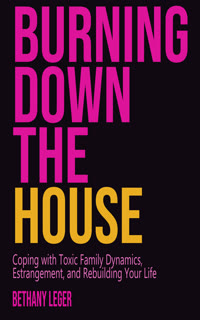
Coping with toxic family dynamics, estrangement, and rebuilding your life. For anyone dealing with the fallout of leaving a high-control group.
View on Amazon →The Accompanying Letter to Hitler
A cover letter accompanied the copy of the Declaration sent to the Chancellor. Reports describe a seven-page communication assuring the government that the IBSA "was not in opposition to the national government of the German Reich" and that the Witnesses' objectives were "completely in agreement with the corresponding goals of the national government."[2]
Some critical sources also quote a line stating that "the Brooklyn headquarters of the Watch Tower Society is pro-German in an exemplary way," reportedly praising Hitler's stance against Anglo-American and Jewish influence.[6] This particular wording is attributed to the accompanying correspondence, and its precise provenance and translation have been debated; it should be treated with appropriate caution rather than as an undisputed transcription. What is not disputed is that the letter's overall thrust was conciliatory. (This should not be confused with Rutherford's later letter of February 9, 1934, which was defiant, demanding that Hitler cease persecution and warning of divine judgment.[2])
Two Readings of the Same Document
The Watchtower's framing: a defense against persecution
The organization's modern position acknowledges the Declaration's tone while rejecting the charge of antisemitism. A 1998 Awake! article revisiting the Declaration stated plainly:
"This statement clearly did not refer to the Jewish people in general, and it is regrettable if it has been misunderstood and has given cause for any offense."[7]The Watch Tower Society has presented the Declaration primarily as evidence of the Witnesses' courage under an emerging dictatorship, emphasizing the protest and the appeal for religious freedom.[5] In the 1974 Yearbook, the Society further suggested that the German branch overseer, Paul Balzereit, had "watered down" Rutherford's original text — an attempt to attribute any compromising language to a subordinate's translation.[3]
The critical reading: an attempted accommodation
Historians have generally found the "protest-only" framing incomplete. The German historian Detlef Garbe, whose Between Resistance and Martyrdom is the definitive scholarly study, describes the Declaration as part of the branch's adaptation efforts under mounting pressure. He notes that in denying any financial ties to Jews, the Witnesses "clearly distanced" themselves from another persecuted group, and that the document employed anti-Jewish slogans at a moment when such language carried unmistakable political meaning.[8] Garbe also rejects the later Watchtower claim that Balzereit alone bore responsibility, arguing that the Society retroactively recast a genuine attempt at accommodation as a heroic protest and scapegoated the German branch leader.[8]
The Canadian historian M. James Penton goes further, calling the Declaration a "compromising document" and arguing that its economic antisemitism echoed themes found in Nazi literature — evidence, in his view, that the leadership was attempting to "pander" to the regime.[9] Penton's reading is the most severe among mainstream scholars and should be weighed alongside more restrained assessments.
Not all scholars agree the document was antisemitic in intent. Gabriele Yonan and others have observed that the Declaration conspicuously omitted the Nazi protocol — no "Heil Hitler," no swastika salutations — that genuinely collaborationist German church statements of 1933 routinely included, and that it lacked the racial-biological antisemitic vocabulary of the era.[10] On this view the language was opportunistic and theologically rooted rather than an endorsement of racial persecution.
The most defensible conclusion is a synthesis: the Declaration was both a protest against an unjust ban and a miscalculated attempt to win tolerance by emphasizing agreement with the regime — including through economic-antisemitic and anti-Western rhetoric that the Nazis would recognize as their own. It was not a call to harm Jews, but neither was it the unambiguous act of moral resistance the organization later portrayed.
The Outcome: Accommodation Rejected, Persecution Intensified
Whatever its intent, the Declaration failed completely. Rather than lifting the ban, the regime escalated. On June 28, 1933 — three days after the convention — SA storm troopers reoccupied the Magdeburg headquarters, sealed the presses, and confiscated stocks of literature; the following year authorities publicly burned tons of Watch Tower books and Bibles.[2]
By 1934 Rutherford had abandoned conciliation. At an international convention in Basel that September, delegates adopted a resolution warning the German government to cease its persecution "otherwise God will destroy you and your national party," and on October 7, 1934, German congregations openly resumed preaching in defiance of the ban. A coordinated flood of protest telegrams — hundreds on October 8 alone — poured into the Reich chancellery from Witnesses worldwide.[2] Hitler is reported to have responded that "this brood will be exterminated in Germany."[2]
The persecution that followed was among the most severe visited on any religious group under the Third Reich. Witnesses refused the "Heil Hitler" salute, refused military service, and refused to abandon their preaching. Roughly 10,000 were imprisoned, an estimated 2,000–5,000 were sent to concentration camps, and between 1,000 and 2,000 died in custody; approximately 250 German and Austrian Witnesses were executed, many for conscientious objection to military service.[11] Uniquely, they were identifiable by the purple triangle and could often secure release by signing a document renouncing their faith — an option most refused. Their steadfastness is documented at length in the companion article on the persecution of Jehovah's Witnesses in Nazi Germany.
This is the central irony of the Declaration of Facts. Its rank-and-file adopters would go on to demonstrate extraordinary courage — the very courage the Watchtower rightly celebrates. Yet the document itself, produced by the leadership around Joseph Rutherford, was an attempt to avoid that confrontation by professing common cause with the regime. The accommodation was refused; the persecution came anyway; and the honest history is the one that holds both truths at once.
See Also
- Joseph Franklin 'Judge' Rutherford (1869–1942)
- Beth Sarim — 'House of the Princes'
- Bible Student Splinter Groups
- Jehovah's Witnesses in Nazi Germany: The Purple Triangle
- The 1925 Prophecy Failure
References
1. ↩ "Persecution of Jehovah's Witnesses in Nazi Germany," Wikipedia (bans and the April 1933 occupation of Magdeburg). [en.wikipedia.org]
2. ↩ "Persecution of Jehovah's Witnesses in Nazi Germany," Wikipedia (convention attendance; seven-page cover letter to Hitler; June 28 raid; Feb. 9, 1934 letter; 1934 Basel resolution and telegram campaign; "this brood will be exterminated"). [en.wikipedia.org]
3. ↩ 1974 Yearbook of Jehovah's Witnesses, p. 111 (2,100,000 copies distributed; later claim that Balzereit "watered down" the text). [jwfacts.com]
4. ↩ "Declaration of Facts," reprinted in the 1934 Yearbook of Jehovah's Witnesses, pp. 134–138. Text as reproduced by researchers. [jwfacts.com]
5. ↩ "Jehovah's Witnesses—Courageous in the Face of Nazi Peril," Awake! (Watchtower framing of the Declaration as a protest). [wol.jw.org]
6. ↩ "Rutherford and the Watchtower's support of Hitler," JWfacts.com (quotations from the accompanying letter, including "pro-German in an exemplary way"; provenance debated). [jwfacts.com]
7. ↩ "Jehovah's Witnesses—Courageous in the Face of Nazi Peril," Awake!, July 8, 1998, p. 14 — the Society's statement addressing the Declaration and the Jewish people.
8. ↩ Detlef Garbe, Between Resistance and Martyrdom: Jehovah's Witnesses in the Third Reich (University of Wisconsin Press, 2008), analysis of the Declaration as adaptation, its anti-Jewish slogans, and critique of the Balzereit scapegoating. [muse.jhu.edu]
9. ↩ M. James Penton, Jehovah's Witnesses and the Third Reich: Sectarian Politics Under Persecution (University of Toronto Press, 2004); see also Penton, "Jehovah's Witnesses, Anti-Semitism and the Third Reich." [jwfacts.com]
10. ↩ Gabriele Yonan and related scholarship noting the absence of Nazi salutation protocol and racial-biological antisemitic terminology in the Declaration, as summarized in "Declaration of Facts," Wikipedia. [en.wikipedia.org]
11. ↩ Casualty and imprisonment statistics from Garbe and the United States Holocaust Memorial Museum, as compiled in "Persecution of Jehovah's Witnesses in Nazi Germany," Wikipedia (≈10,000 imprisoned; 2,000–5,000 in camps; ~250 executed; purple triangle). [en.wikipedia.org]